
 Morning & Evening
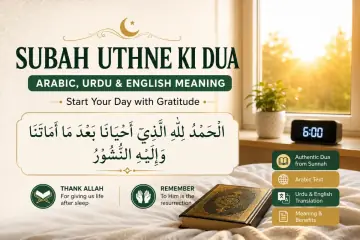
Subah Uthne Ki Dua
The morning gratitude prayer recited upon waking, thanking Allah for a new day.
Read duaExplore duas with Arabic, Urdu and English translations, and discover meaningful Muslim names.
Arabic text, transliteration and meaning in one place.
Morning & EveningThe morning gratitude prayer recited upon waking, thanking Allah for a new day.
Read dua Morning & Evening
A blessed sunnah prayer recited after hearing the Adhan, seeking the intercession of Prophet Muhammad ﷺ.
Read duaMorning and evening are natural points at which to pause, remember Allah, and set the direction of the day or night. The duas in this collection include words connected with waking, hearing the call to prayer, gratitude, protection, and mindful remembrance. Keeping them together makes it easier to learn one supplication at a time instead of trying to build an entire routine in a single day.
A practical approach is to choose one short dua, read its meaning, and repeat it consistently at the relevant time. Once the words feel familiar, add another. A small routine that is understood and maintained is usually easier to sustain than a long list read without attention. The Arabic text remains central, while the transliteration can help a new reader follow the sequence of sounds.
Arabic should be learned from the Arabic script wherever possible. Transliteration is a temporary reading aid: it approximates sounds with Latin letters but cannot represent every Arabic letter, vowel, or point of articulation precisely. Use it to follow the structure of a dua, then compare it with the Arabic text and listen to a careful recitation.
A translation explains the general meaning rather than replacing the original wording. Two reliable translations may use different English or Urdu phrases while communicating the same central request. Reading the meaning before reciting can help you recognise the praise, gratitude, request, or expression of trust contained in the dua.
Where a page provides a Quran or hadith reference, use it to read the wider passage and context. Transliteration, popular titles, and explanatory notes are editorial aids; they are not substitutes for the source itself. Reports can also differ in wording or scholarly grading. For detailed questions about authenticity, pronunciation, or how a supplication relates to a religious ruling, ask a qualified teacher or scholar you trust.
Personal dua may also be made sincerely in your own words and language. The published pages are learning resources, not promises that repeating a phrase a fixed number of times will produce a guaranteed worldly result. Approach dua with humility, patience, lawful effort, and hope in Allah.
Ar-Rahman · The Most Merciful