
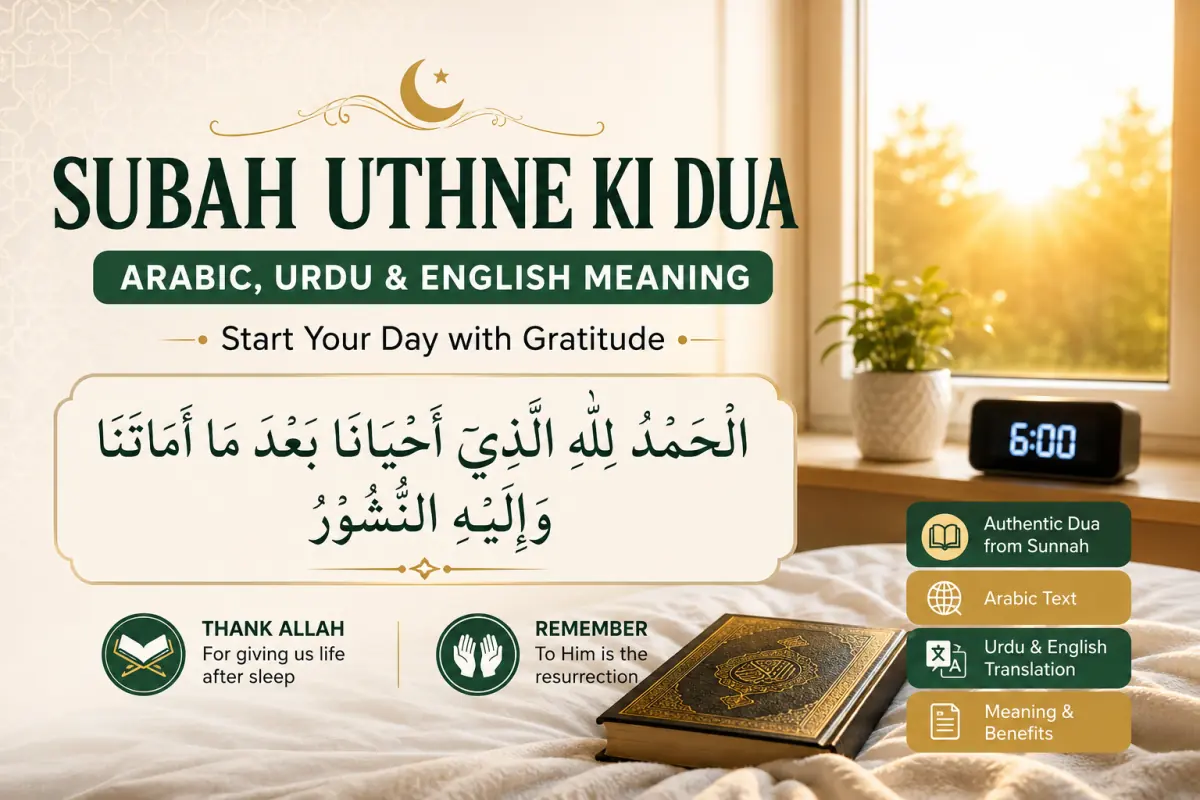
Waking up may feel like an ordinary part of life, but Islam teaches us to begin even this simple moment with the remembrance of Allah. Before checking WhatsApp, social media, emails, or the news, you can take a few seconds to thank Allah for giving you another day.
The Subah Uthne Ki Dua is a short Sunnah supplication recited after waking from sleep. It is easy to memorize, meaningful, and authentically reported from Prophet Muhammad ﷺ.
Below, you’ll find the Subah Uthne Ki Dua in Arabic, transliteration, Urdu and English translation, Hadith reference, meaning, and some practical tips for remembering it every morning.
What Is Subah Uthne Ki Dua?
The dua recited after waking up is:
Alhamdu lillahil-ladhi ahyana ba'da ma amatana wa ilayhin-nushur.
It means that all praise belongs to Allah, who gave us life after sleep, and that ultimately we will return to Him.
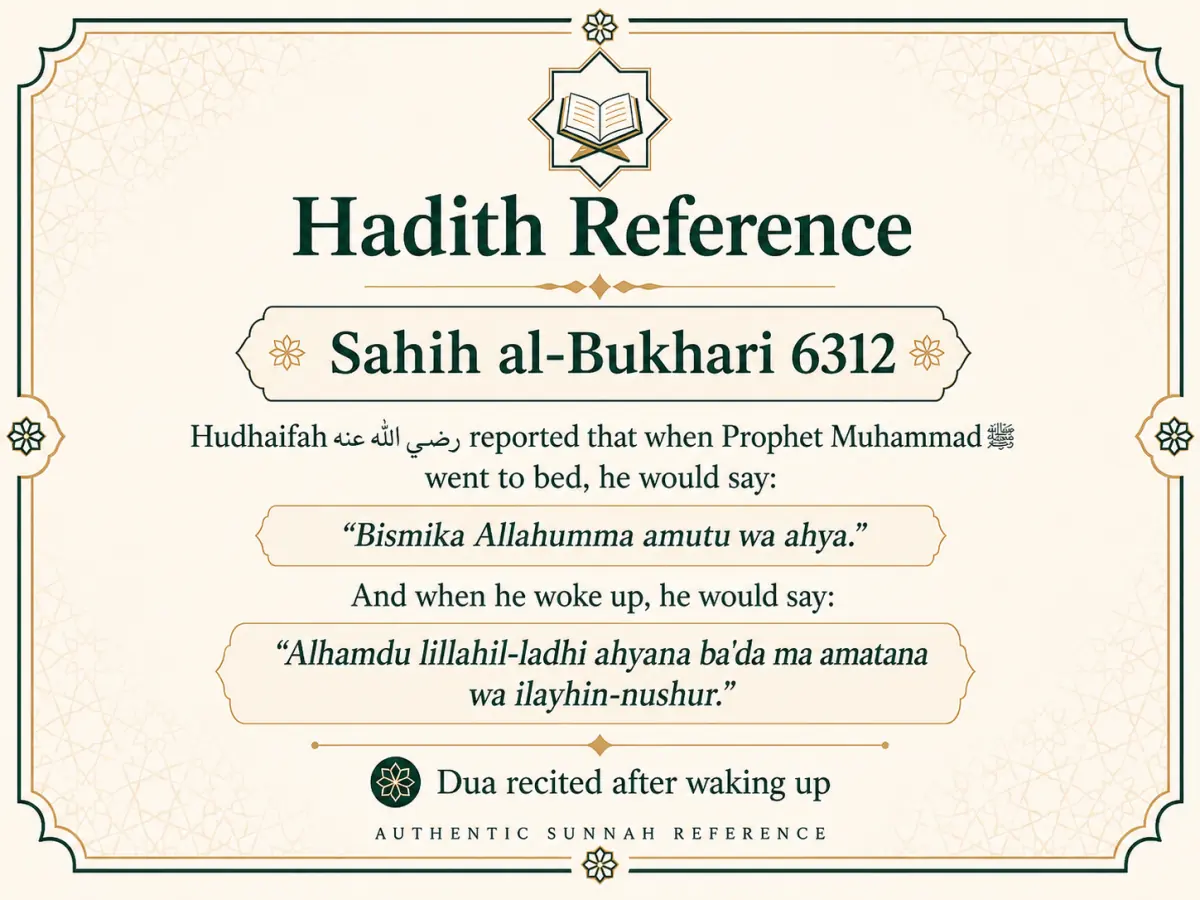
Prophet Muhammad ﷺ used to recite this supplication after waking. It is recorded in Sahih al-Bukhari 6312.
The dua is short, but its meaning is powerful. It reminds us to begin the day with gratitude while also remembering that our lives and our final return are in Allah’s hands.
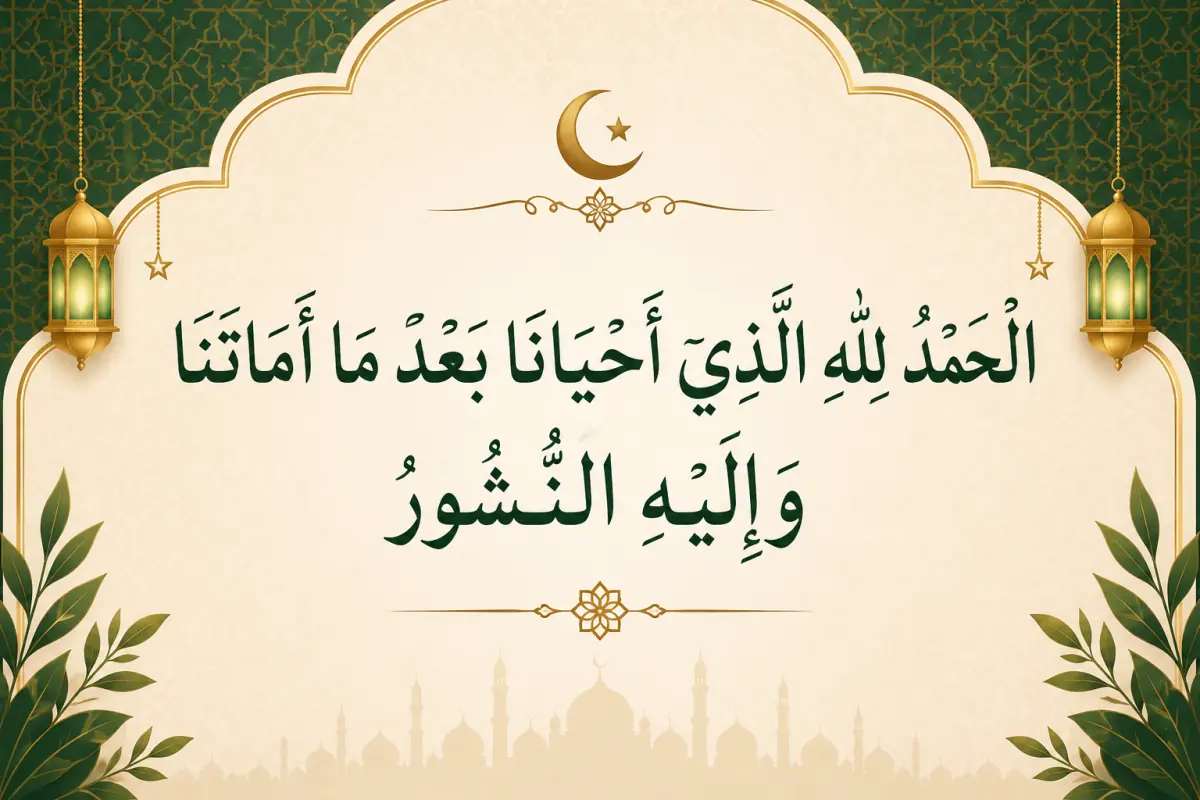
Subah Uthne Ki Dua in Arabic
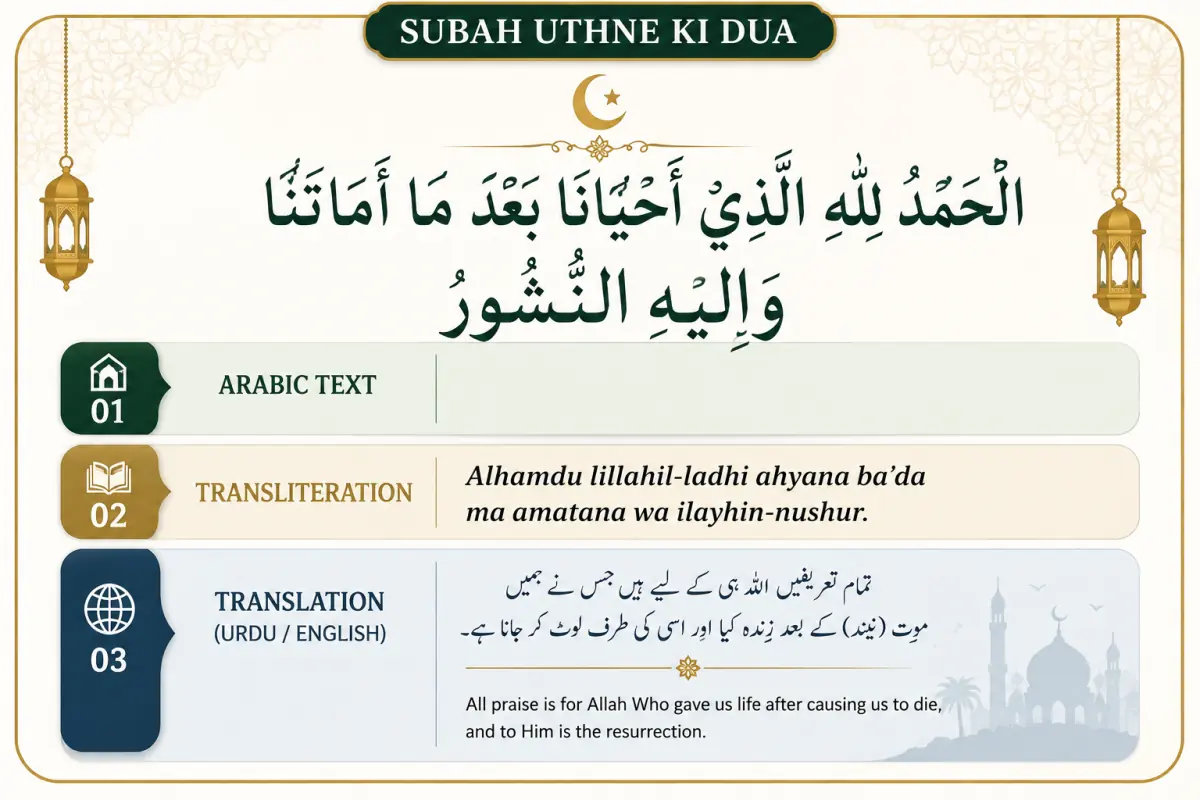
اَلْحَمْدُ لِلّٰهِ الَّذِي أَحْيَانَا بَعْدَ مَا أَمَاتَنَا وَإِلَيْهِ النُّشُورُ
If you are learning the dua for the first time, don’t worry about memorizing everything in one sitting. Learn one small phrase, repeat it regularly, and then add the next part.
Subah Uthne Ki Dua Transliteration
Alhamdu lillahil-ladhi ahyana ba'da ma amatana wa ilayhin-nushur.
You can make pronunciation easier by breaking it into four parts:
- Alhamdu lillah – All praise belongs to Allah
- Alladhi ahyana – Who gave us life
- Ba'da ma amatana – After causing us to die
- Wa ilayhin-nushur – And to Him is the resurrection
Transliteration is useful for people who cannot yet read Arabic, although learning the Arabic wording and correct pronunciation gradually is always helpful.
Subah Uthne Ki Dua Meaning in Urdu
Urdu Translation:
تمام تعریفیں اللہ ہی کے لیے ہیں جس نے ہمیں موت (نیند) کے بعد زندہ کیا اور اسی کی طرف لوٹ کر جانا ہے۔
سادہ الفاظ میں، یہ دعا ہمیں یاد دلاتی ہے کہ ہر نئی صبح اللہ تعالیٰ کی ایک نعمت ہے۔ ہم رات کو سوتے ہیں اور پھر اللہ کے حکم سے دوبارہ جاگتے ہیں۔ اسی لیے دن کی شروعات اللہ کا شکر ادا کرتے ہوئے کرنا ایک خوبصورت سنت ہے۔
Subah Uthne Ki Dua in English
The English meaning is:
“All praise is for Allah Who gave us life after causing us to die, and to Him is the resurrection.”
The wording connects waking from sleep with the greater reality of resurrection.
The Quran also speaks about Allah taking souls during death and during sleep in Surah Az-Zumar 39:42. This makes waking up a natural moment to reflect on life, gratitude, and our eventual return to Allah.
Authentic Hadith Reference
The dua after waking up comes from an authentic Hadith.
Hudhaifah رضي الله عنه reported that when Prophet Muhammad ﷺ went to bed, he would say:
“Bismika Allahumma amutu wa ahya.”
And when he woke up, he would say:
“Alhamdu lillahil-ladhi ahyana ba'da ma amatana wa ilayhin-nushur.”
This authentic source is important because many duas circulate online without clear references. Checking reliable Hadith collections helps distinguish established Sunnah supplications from general prayers.
What Does “Wa Ilayhin-Nushur” Mean?
The final words, “wa ilayhin-nushur,” mean “and to Him is the resurrection.”
This part gives the dua a deeper meaning. Waking up is not only about receiving another morning; it also reminds a Muslim that life is temporary.
Every new day gives us another opportunity to pray, seek forgiveness, help other people, improve our character, and become closer to Allah.
That is why this short morning dua combines gratitude with remembrance of the Hereafter.
Why Read the Dua After Waking Up?
One of the simplest benefits of reciting Subah Uthne Ki Dua is that it begins your day with dhikr.
For many of us, the first thing we reach for after waking is our phone. Within seconds, our minds are filled with notifications, messages, videos, and news.
The waking dua creates a different beginning.
Before giving your attention to the world, you say Alhamdulillah.
It also develops gratitude. Waking up safely for another day is something we can easily take for granted.
For parents, this dua is also an easy Sunnah to teach children because it naturally connects with something they do every morning.
How to Remember Subah Uthne Ki Dua
If you regularly forget the dua, make it part of your environment rather than depending only on memory.
Keep the dua written beside your bed or set it as your phone lock-screen text. Read it several times before sleeping and again as soon as you wake up.
You can also memorize it phrase by phrase.
Parents can recite it aloud with children every morning. With consistent repetition, the words usually become familiar very quickly.
A useful rule is simple: dua first, phone second.
Subah Uthne Ki Dua vs Sone Ki Dua
The dua before sleeping and the dua after waking are closely connected.
| Time | Dua |
|---|---|
| Before sleeping | Bismika Allahumma amutu wa ahya |
| After waking | Alhamdu lillahil-ladhi ahyana ba'da ma amatana wa ilayhin-nushur |
The bedtime dua places your sleep in Allah’s name, while the waking dua thanks Him for giving you life again.
Both are mentioned together in Sahih al-Bukhari.
Frequently Asked Questions
What dua should I read immediately after waking up?
Recite:
Alhamdu lillahil-ladhi ahyana ba'da ma amatana wa ilayhin-nushur.
Is Subah Uthne Ki Dua authentic?
Yes. It is authentically reported in Sahih al-Bukhari 6312.
Can children learn this dua?
Yes. Its short length makes it suitable for children to learn gradually.
Can I read the Urdu or English translation?
Translations are useful for understanding the meaning. However, try to learn the original Arabic wording of the Sunnah dua for recitation.
Final Thoughts
The Subah Uthne Ki Dua takes only a few seconds to recite, yet it carries a powerful reminder about gratitude, life, and returning to Allah.
Instead of beginning your morning with notifications, try beginning with:
Alhamdu lillahil-ladhi ahyana ba'da ma amatana wa ilayhin-nushur.
Understand its meaning, repeat it consistently, and it can naturally become one of the first things you remember every morning.
 Sone Ki Dua
  Azan Ke Baad Ki Dua