

The Azan is more than a call announcing the time for prayer. It is a reminder to turn our attention back to Allah and prepare for Salah. When we hear the Azan, the Sunnah is to respond to the Mu’adhdhin, send blessings upon Prophet Muhammad ﷺ, and then recite the dua after Azan.
This short supplication asks Allah to grant Prophet Muhammad ﷺ Al-Wasilah, Al-Fadilah, and Maqam Mahmud, the praised station promised to him.
Dua After Azan in Arabic
After the Azan has finished, recite:
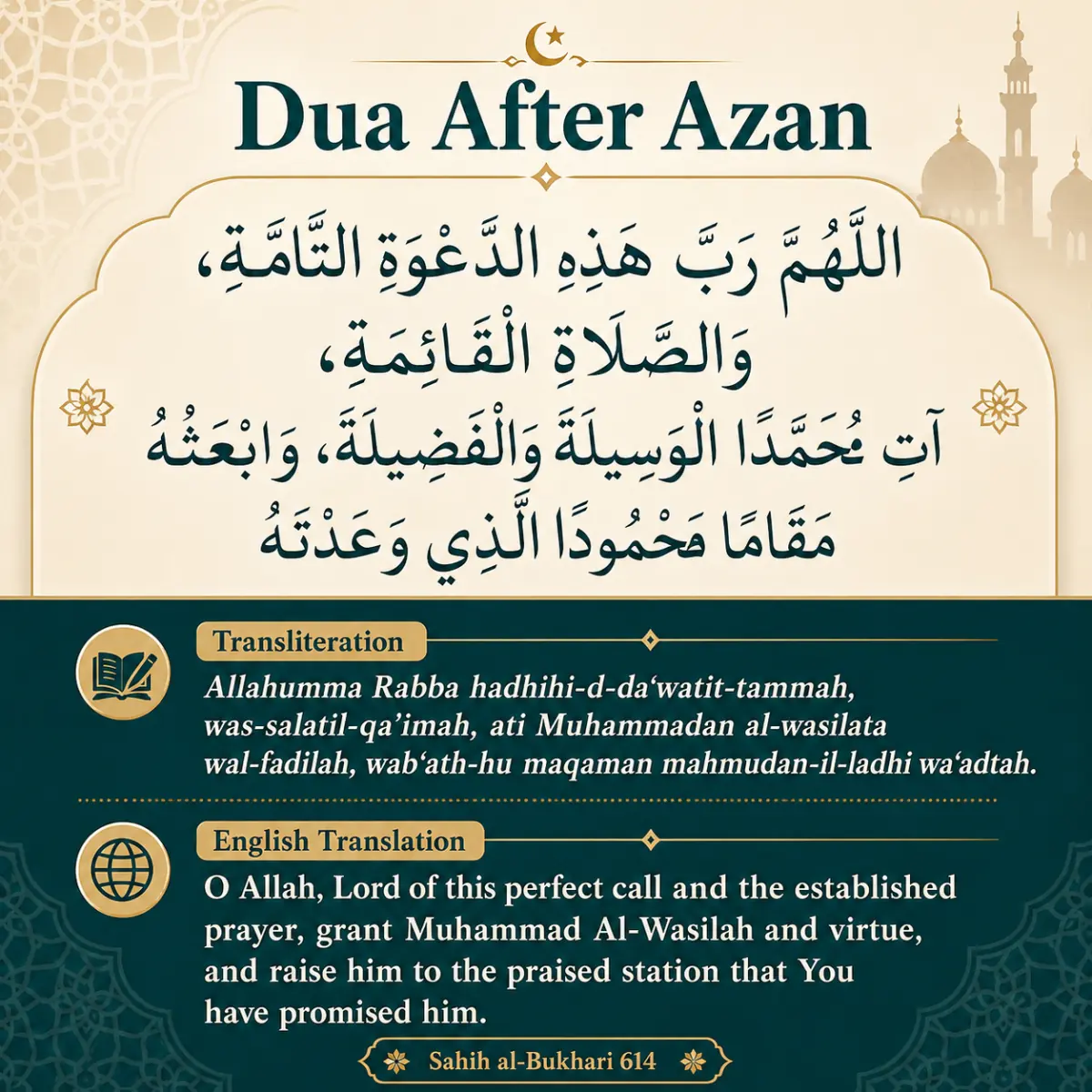
اللَّهُمَّ رَبَّ هَذِهِ الدَّعْوَةِ التَّامَّةِ، وَالصَّلَاةِ الْقَائِمَةِ، آتِ مُحَمَّدًا الْوَسِيلَةَ وَالْفَضِيلَةَ، وَابْعَثْهُ مَقَامًا مَحْمُودًا الَّذِي وَعَدْتَهُ
This dua is mentioned in an authentic narration recorded in Sahih al-Bukhari.
Dua After Azan Transliteration
If you cannot read Arabic fluently, you can use this transliteration:
Allahumma Rabba hadhihi-d-da‘watit-tammah, was-salatil-qa'imah, ati Muhammadan al-wasilata wal-fadilah, wab‘ath-hu maqaman mahmudan-il-ladhi wa‘adtah.
A simple way to memorize it is to learn one short phrase at a time and repeat it after every Azan.
English Translation of the Dua
The meaning is:
“O Allah, Lord of this perfect call and the established prayer, grant Muhammad ﷺ Al-Wasilah and virtue, and raise him to the praised station that You have promised him.”
Understanding the meaning can make the dua easier to remember and more meaningful when you recite it.
How Should You Respond to the Azan?
While the Azan is being called, Muslims are encouraged to repeat the words of the Mu’adhdhin.
For example, when the Mu’adhdhin says Allahu Akbar, you repeat Allahu Akbar.
There is one important exception. When you hear:
Hayya ‘alas-salah
and
Hayya ‘alal-falah
you should say:
لَا حَوْلَ وَلَا قُوَّةَ إِلَّا بِاللَّهِ
La hawla wa la quwwata illa billah.
It means:
“There is no power and no strength except through Allah.”
You can read more about responding to the Adhan at Life With Allah.
What Should You Recite After the Azan?
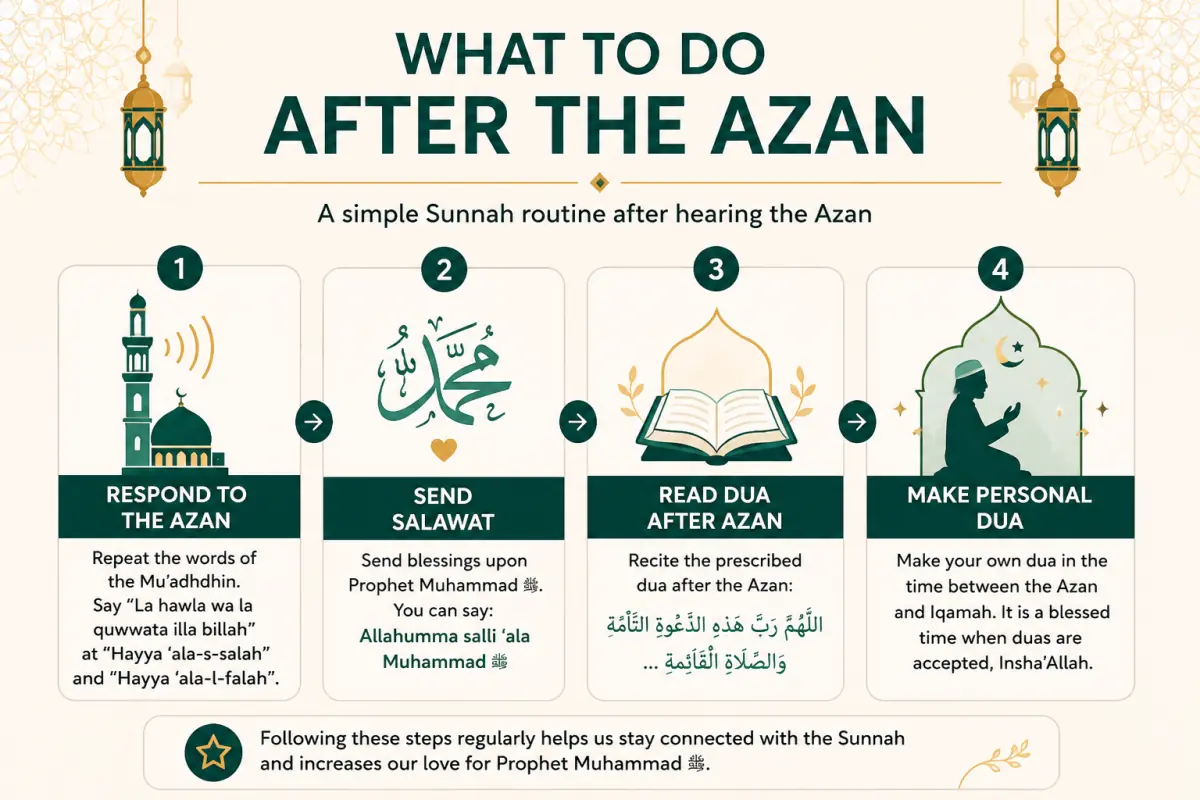
A simple Sunnah routine after hearing the Azan is:
- Repeat the words of the Mu’adhdhin.
- Say La hawla wa la quwwata illa billah at the appropriate phrases.
- Send Salawat upon Prophet Muhammad ﷺ.
- Recite the prescribed dua after Azan.
- Make your own personal dua before the Iqamah.
This takes only a few minutes and is an easy practice to include among your morning and evening duas.
Sending Salawat After the Azan
After responding to the Azan, Muslims are encouraged to send blessings upon Prophet Muhammad ﷺ.
A simple form is:
Allahumma salli ‘ala Muhammad ﷺ
You may also recite a longer authentic form of Salawat.
A narration in Sahih Muslim encourages Muslims to repeat the words of the caller and then send blessings upon the Prophet ﷺ.
Virtues of the Dua After Azan
The dua after Azan has a special virtue because it asks Allah to grant Prophet Muhammad ﷺ a distinguished rank.
Al-Wasilah refers to a high rank in Paradise, while Maqam Mahmud refers to the praised station promised to the Prophet ﷺ.
According to Sahih al-Bukhari, the Prophet ﷺ taught that the person who recites this supplication after hearing the Azan will be deserving of his intercession on the Day of Judgment.
That makes this short dua a valuable Sunnah that can easily become part of everyday worship.
Making Dua Between Azan and Iqamah
After reciting the prescribed dua, you can also make personal supplications or explore other everyday duas.
The time between the Azan and Iqamah is regarded as a valuable time for dua. You can ask Allah for things such as:
- Forgiveness
- Guidance
- Halal provision
- Good health
- Protection for your family
- Ease in difficulties
- Success in this life and the Hereafter
A narration in Sunan Abi Dawud mentions that supplication between the Adhan and Iqamah is not rejected.
How to Memorize the Dua After Azan
If the dua feels difficult at first, do not try to memorize the whole thing in one sitting.
Start with:
Allahumma Rabba hadhihi-d-da‘watit-tammah...
Once that becomes familiar, add the next phrase.
Reading the Arabic alongside the transliteration, listening to a reliable recitation, and repeating it after each Azan can make memorization much easier. Learning the meaning at the same time also helps the words stay in your memory.
Frequently Asked Questions
What dua should be recited after Azan?
Recite the supplication beginning with “Allahumma Rabba hadhihi-d-da‘watit-tammah...” after the Azan has finished.
What should I say after “Hayya ‘alas-salah”?
Say:
La hawla wa la quwwata illa billah.
The same response is given after Hayya ‘alal-falah.
Should I send Salawat after the Azan?
Yes. Sending blessings upon Prophet Muhammad ﷺ after responding to the Azan is recommended.
Can I make my own dua after the Azan?
Yes. You can make personal supplications, especially during the time between the Azan and Iqamah.
Final Words
Learning the dua after Azan is a simple way to follow the Sunnah and make better use of the moments surrounding Salah. Respond to the Mu’adhdhin, send Salawat upon Prophet Muhammad ﷺ, recite the prescribed dua, and then make your personal supplications.
Instead of only memorizing the Arabic words, try to understand their meaning as well. With regular repetition after each Azan, this short but meaningful dua can naturally become part of your daily worship.

 Sone Ki Dua
  Subah Uthne Ki Dua