

Ramadan is a special time of worship, patience, self-control, and getting closer to Allah. Before beginning each day's fast, Muslims make the intention to fast for the sake of Allah. This intention is commonly searched for as Roza Rakhne Ki Dua, Sehri Ki Dua, or Roza Rakhne Ki Niyat.
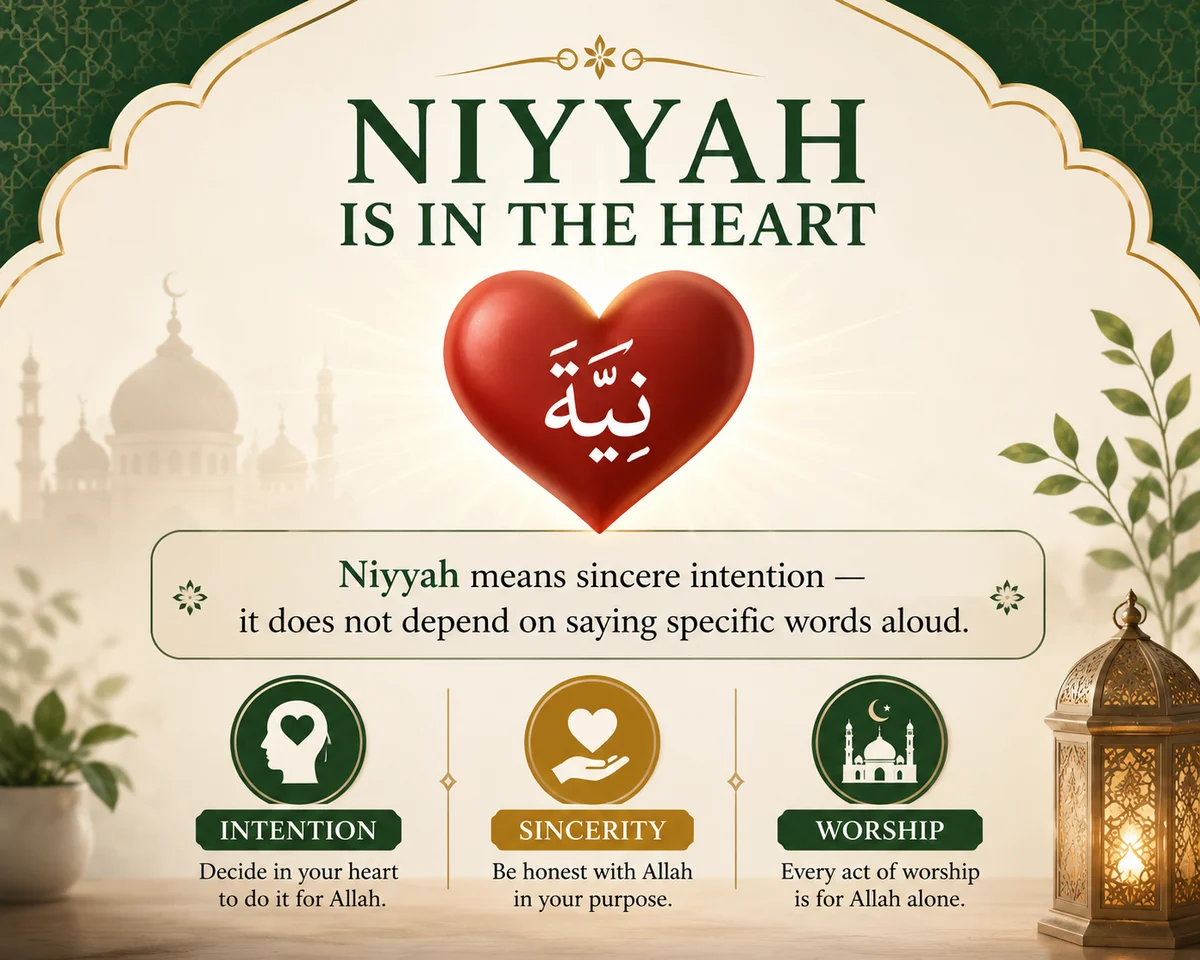
Many Muslims recite a short Arabic phrase at Sehri to express this intention. However, niyyah is essentially an intention of the heart. You do not have to say a specific Arabic sentence for Allah to know that you intend to fast.
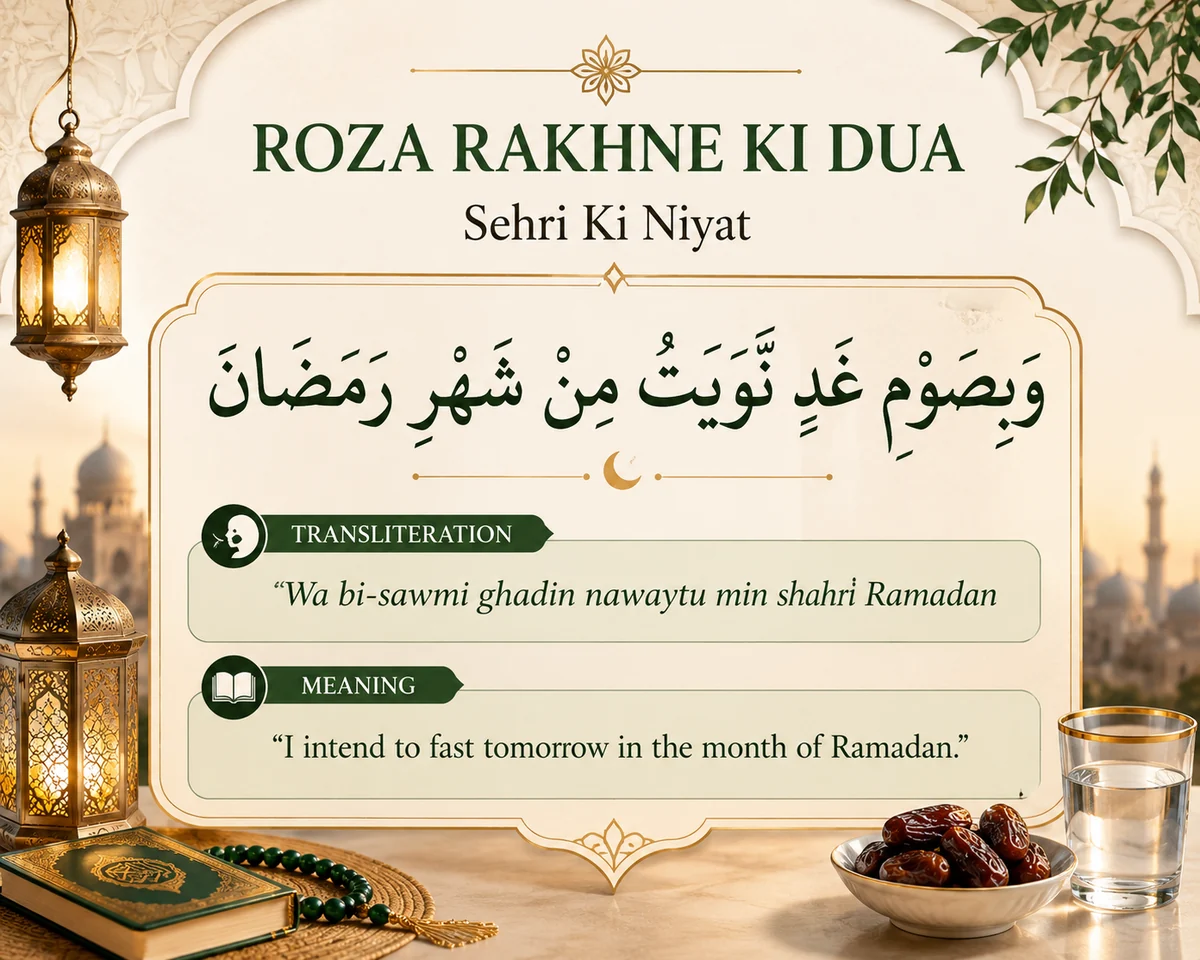
Here is the commonly recited Roza Rakhne Ki Dua with its Arabic text, transliteration, and Urdu and English meanings.
Roza Rakhne Ki Dua in Arabic
وَبِصَوْمِ غَدٍ نَّوَيْتُ مِنْ شَهْرِ رَمَضَانَ
This phrase is commonly recited during Sehri as an expression of the intention to observe the Ramadan fast.
Roza Rakhne Ki Dua Transliteration
Wa bi-sawmi ghadin nawaytu min shahri Ramadan.
You can read the transliteration if you are not comfortable reading Arabic yet. Understanding the meaning is also helpful because it reminds you why you are fasting.
Roza Rakhne Ki Dua in Urdu
اور میں نے ماہِ رمضان کے کل کے روزے کی نیت کی۔
Roman Urdu:
“Aur maine Mah-e-Ramadan ke kal ke rozay ki niyat ki.”
Roza Rakhne Ki Dua in English
“I intend to fast tomorrow in the month of Ramadan.”
In simple terms, these words express your intention to observe the Ramadan fast as an act of worship.
What Does Roza Rakhne Ki Niyat Mean?
Niyyah means intention. It is the conscious decision in your heart to perform an act of worship for Allah.
The importance of intention is highlighted in the well-known hadith in which the Prophet Muhammad ﷺ taught that deeds are judged according to intentions. You can read the narration in Sahih al-Bukhari 1 on Sunnah.com.
This helps explain why fasting is more than simply staying hungry or thirsty. A person may avoid food because they are dieting or busy, but a Ramadan fast is observed with a conscious intention to worship Allah.
Is It Necessary to Recite Roza Rakhne Ki Dua?
A common misunderstanding is that you must verbally say the exact words “Wa bi-sawmi ghadin nawaytu…” for your fast to count.
The intention itself is in the heart. If you know that you are going to fast Ramadan for Allah, you have formed a niyyah. Scholarly explanations of fasting also distinguish the intention of the heart from verbally pronouncing it. Read more about fasting intention at SeekersGuidance.
So, if you forget to recite the commonly known Sehri Dua but genuinely intended to fast, forgetting those specific words does not mean you had no intention.
When Should You Make Niyyah for Roza?
For a Ramadan fast, Muslims normally make their intention before the fast begins. Sehri is therefore a natural time to be conscious of your intention.
For example, if you wake up before Fajr specifically to eat Sehri because you are going to fast that day, your actions already reflect your intention.
There are differences among Islamic schools of jurisprudence regarding some detailed rules, including the timing and renewal of intention. For individual circumstances, it is best to follow a trusted scholar or the guidance of the school of Islamic law you follow.
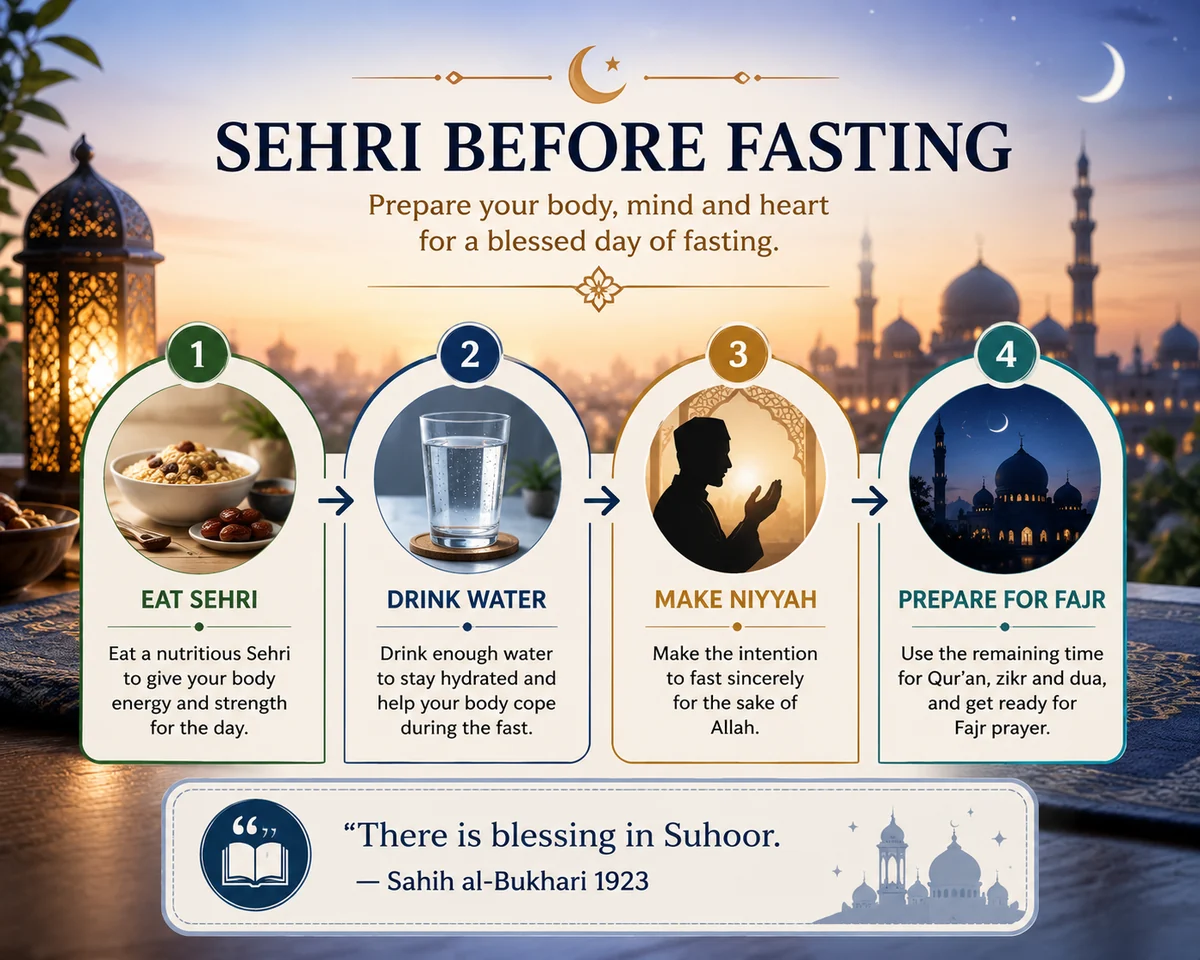
Importance of Sehri Before Fasting
Sehri, also called Suhoor, is the pre-dawn meal eaten before the fast begins.
The Prophet Muhammad ﷺ encouraged Muslims to eat Suhoor and said that there is blessing in it. This narration is recorded in Sahih al-Bukhari 1923.
Sehri can also help you prepare physically for the day. Eating nourishing foods and drinking enough water can make fasting more manageable, especially during longer or warmer days.
But remember: Sehri and niyyah are not the same thing. Sehri is the pre-dawn meal, while niyyah is your intention to fast.
What If You Forget to Recite Sehri Ki Dua?
If you forget the commonly recited Roza Rakhne Ki Dua, do not immediately assume that your fast is invalid.
Ask yourself a simple question: Did I intend to fast today for Ramadan?
If you woke up for Sehri, prepared yourself for fasting, or consciously decided that you would observe the fast, then there was an intention in your heart.
The Arabic wording can be useful as a reminder, but niyyah should not be reduced to simply memorizing a sentence.
Roza Rakhne Ki Dua and Roza Kholne Ki Dua
These two are often confused.
Roza Rakhne Ki Dua refers to the words commonly used to express the intention to fast before the fast begins.
Roza Kholne Ki Dua, on the other hand, relates to Iftar when Muslims break their fast after sunset.
Both moments are important parts of Ramadan, but they occur at different times and serve different purposes.
Frequently Asked Questions
What is the dua for keeping Roza?
The commonly recited words are:
وَبِصَوْمِ غَدٍ نَّوَيْتُ مِنْ شَهْرِ رَمَضَانَ
Meaning: “I intend to fast tomorrow in the month of Ramadan.”
Can I make Roza ki niyat in Urdu?
Yes. Niyyah is the intention of your heart and does not depend on using a particular language.
Can I fast if I forgot to say the Sehri Dua?
If you genuinely intended to observe the Ramadan fast, forgetting to verbally recite the commonly used wording does not mean you had no niyyah.
Is Sehri compulsory for keeping a fast?
Sehri is a blessed and strongly encouraged practice, but it should not be confused with the intention itself. The Prophet ﷺ specifically encouraged Muslims to take Suhoor because of its blessing.
Final Thoughts
Roza Rakhne Ki Dua is a simple way to express your intention before fasting, but the most important part of niyyah is what is in your heart. As you prepare for another Ramadan fast, use Sehri not only to prepare your body but also to remind yourself that you are fasting sincerely for Allah.
 Sone Ki Dua
  Subah Uthne Ki Dua