
When someone passes away, one of the most meaningful things Muslims can do is make dua for them. A sincere Mayyat Ki Dua asks Allah to forgive the deceased, have mercy on them, accept their good deeds, and overlook their mistakes.
At the same time, Muslims often say Inna Lillahi wa Inna Ilayhi Raji’un after hearing about a death. This Quranic phrase reminds us that every person belongs to Allah and will eventually return to Him.
Below you can read Mayyat Ki Dua in Arabic, Urdu, and English, along with short duas for forgiveness and mercy.
Mayyat Ki Dua in Arabic
A beautiful supplication for the deceased is:
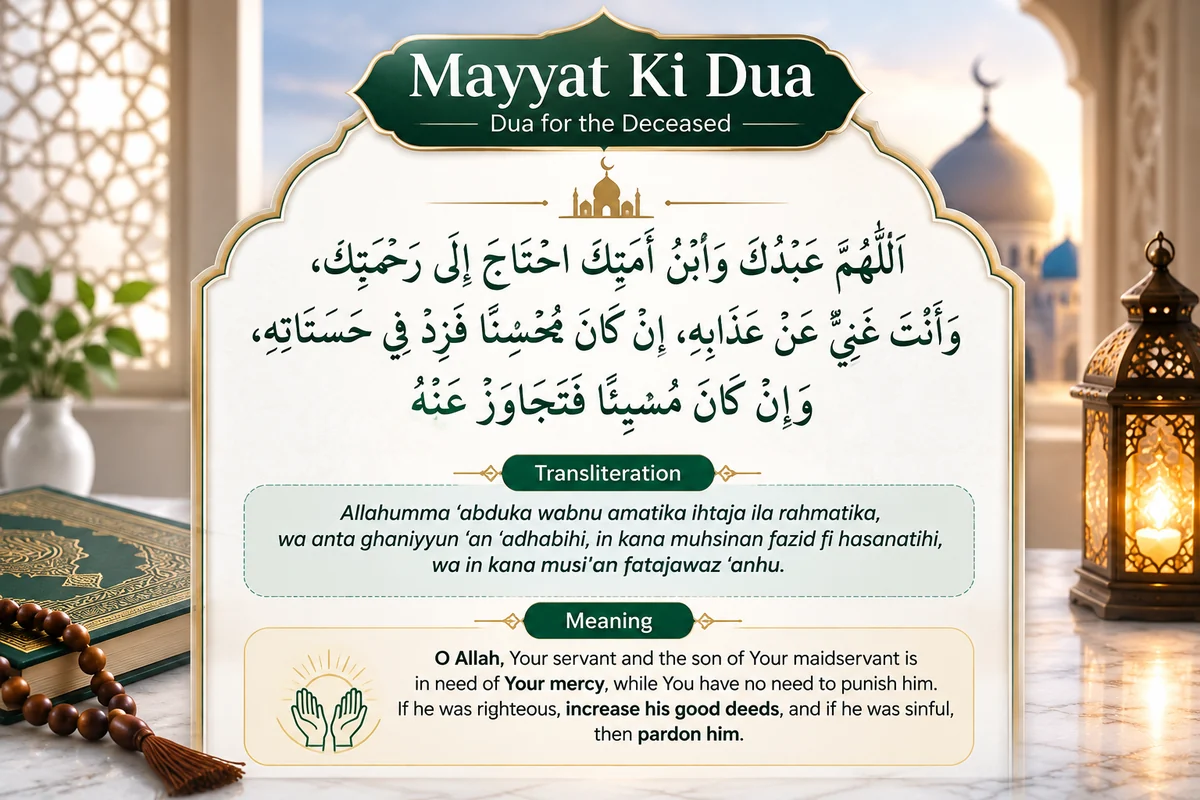
اللَّهُمَّ عَبْدُكَ وَابْنُ أَمَتِكَ احْتَاجَ إِلَى رَحْمَتِكَ، وَأَنْتَ غَنِيٌّ عَنْ عَذَابِهِ، إِنْ كَانَ مُحْسِناً فَزِدْ فِي حَسَنَاتِهِ، وَإِنْ كَانَ مُسِيئاً فَتَجَاوَزْ عَنْهُ
Transliteration:
Allahumma ‘abduka wabnu amatika ihtaja ila rahmatika, wa anta ghaniyyun ‘an ‘adhabihi, in kana muhsinan fazid fi hasanatihi, wa in kana musi’an fatajawaz ‘anhu.
This dua asks Allah to show mercy to the deceased. It also asks Him to increase the reward of their good deeds and forgive their shortcomings.
Mayyat Ki Dua in Urdu
The Urdu translation is:
اے اللہ! تیرا بندہ اور تیری بندی کا بیٹا تیری رحمت کا محتاج ہے، اور تو اسے عذاب دینے سے بے نیاز ہے۔ اگر وہ نیک تھا تو اس کی نیکیوں میں اضافہ فرما، اور اگر وہ گناہ گار تھا تو اس سے درگزر فرما۔
The meaning is simple but powerful. After death, a person depends completely on the mercy of Allah. Through this dua, we ask Allah to accept their good deeds and pardon any mistakes they made during their life.
Mayyat Ki Dua in English
The English meaning is:
“O Allah, Your servant and the son of Your maidservant is in need of Your mercy, while You have no need to punish him. If he was righteous, increase his good deeds, and if he was sinful, then pardon him.”
Understanding the translation can help you make the dua with greater attention and sincerity rather than simply repeating the words.
What to Say When Someone Dies in Islam
When Muslims hear that someone has died, they commonly say:
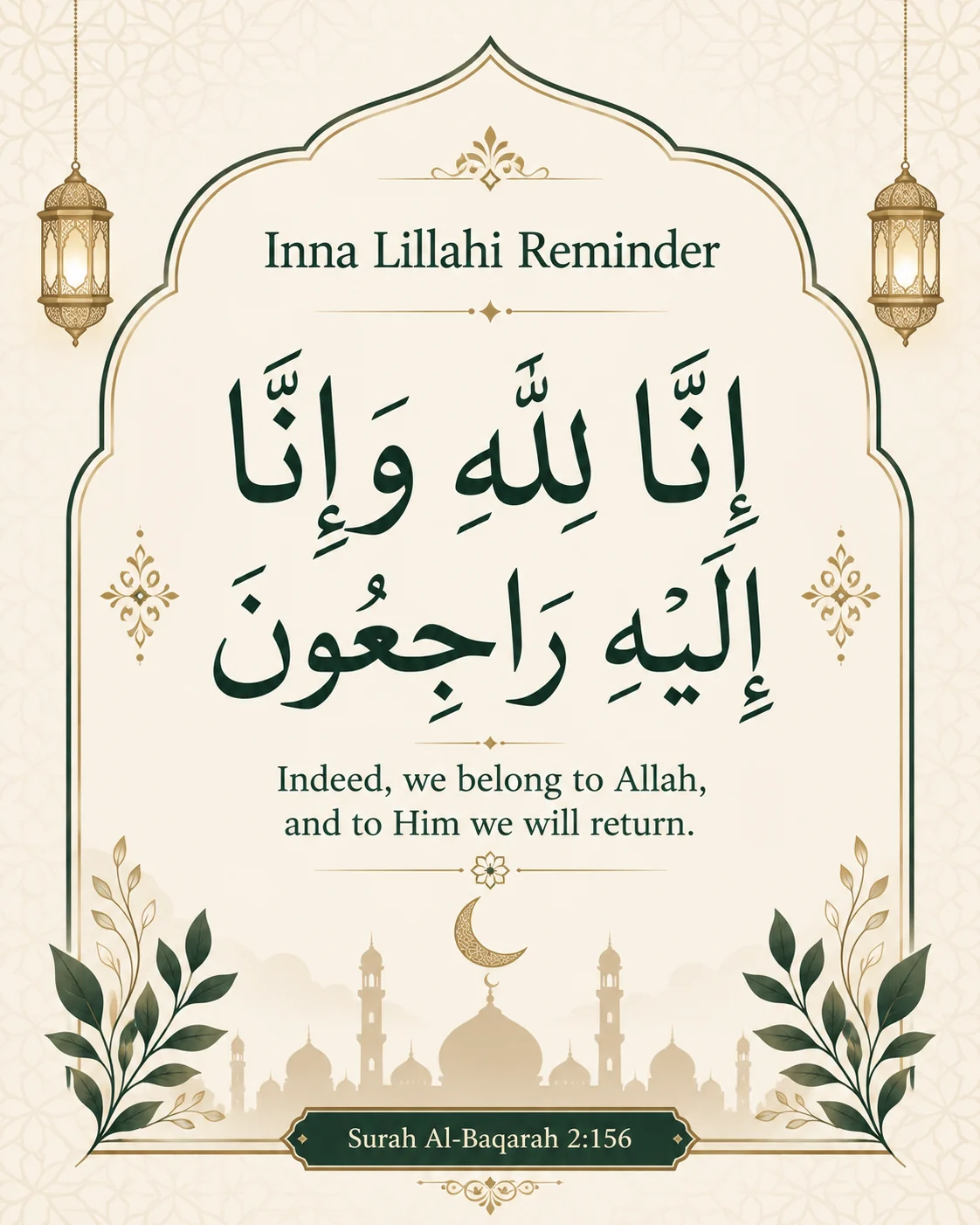
إِنَّا لِلَّٰهِ وَإِنَّا إِلَيْهِ رَاجِعُونَ
Transliteration:
Inna Lillahi wa Inna Ilayhi Raji’un.
Meaning:
“Indeed, we belong to Allah, and indeed to Him we will return.”
These words come from Surah Al-Baqarah 2:156. You can read the verse and its translation on Quran.com.
The verse teaches Muslims to remember Allah during times of loss and hardship. It is also a reminder that worldly life is temporary and that everyone will return to their Creator.
Is Inna Lillahi a Mayyat Ki Dua?
Inna Lillahi wa Inna Ilayhi Raji’un is closely connected with death, but it is not exactly the same as a dua asking forgiveness for the deceased.
It is a Quranic statement expressing patience, acceptance, and recognition that everything belongs to Allah.
A direct dua for the deceased, however, specifically asks Allah for maghfirah (forgiveness), rahmah (mercy), and reward.
So when someone passes away, you can say Inna Lillahi wa Inna Ilayhi Raji’un and then make a separate dua for their forgiveness.
Short Dua for Mayyat and Maghfirat
If you are looking for a short and easy dua, you can recite:
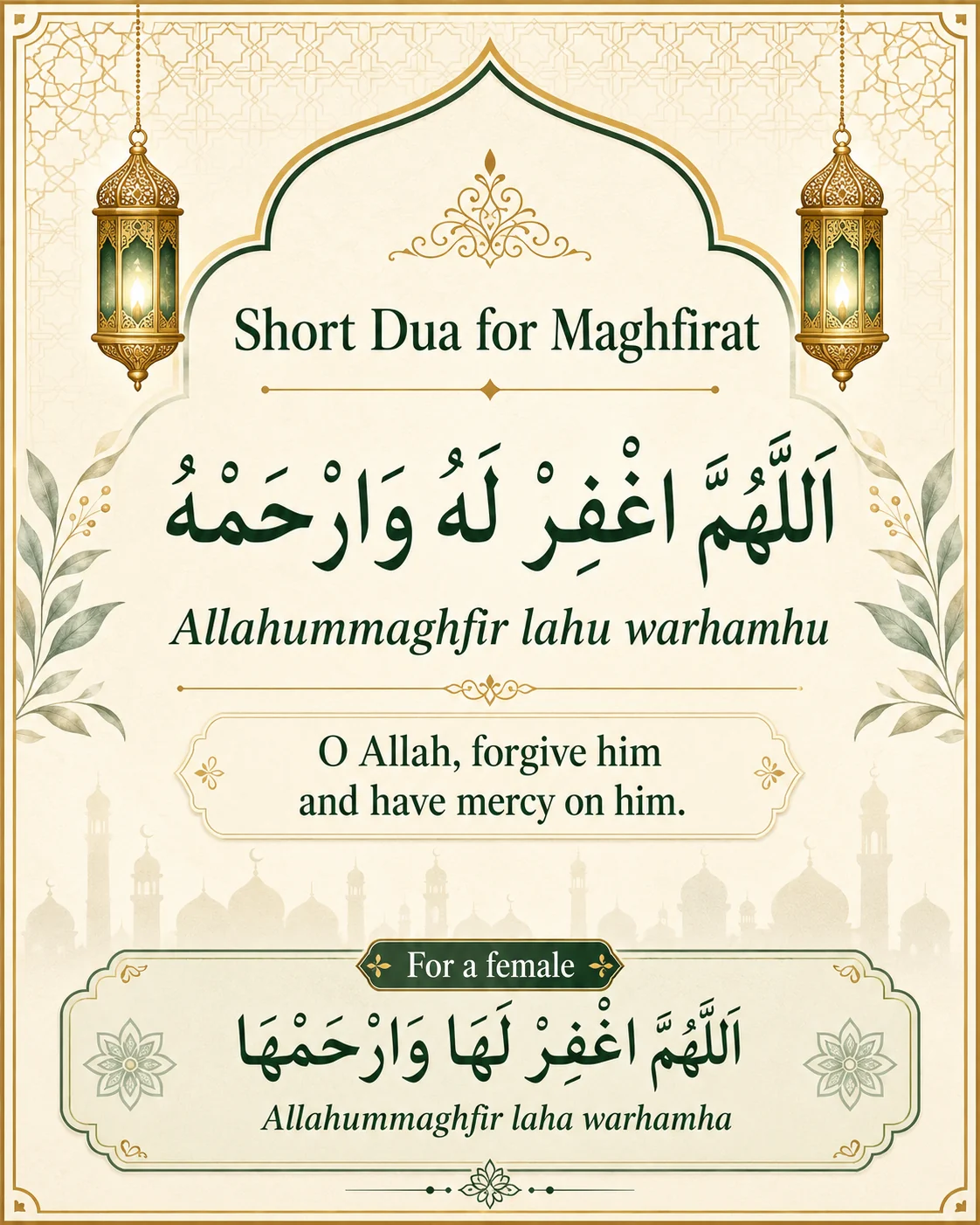
اللَّهُمَّ اغْفِرْ لَهُ وَارْحَمْهُ
Transliteration:
Allahummaghfir lahu warhamhu.
Meaning:
“O Allah, forgive him and have mercy on him.”
For a deceased woman, you can say:
اللَّهُمَّ اغْفِرْ لَهَا وَارْحَمْهَا
Transliteration:
Allahummaghfir laha warhamha.
A longer funeral supplication asking Allah for forgiveness, mercy, pardon, and honor for the deceased is recorded in Sahih Muslim 963.
These short duas are useful because they are easy to remember and can be recited whenever the deceased comes to mind.
Why Do Muslims Make Dua for the Deceased?
Dua for the deceased is an act of compassion and remembrance. Muslims ask Allah to forgive the person and grant them a better condition in the Hereafter.
You can ask Allah to:
- Forgive their sins and shortcomings.
- Accept their good deeds.
- Increase their rewards.
- Have mercy on them.
- Grant them peace in the Hereafter.
- Give them a high place in Jannah.
The Prophet Muhammad ﷺ also taught that after a person dies, certain good deeds can continue benefiting them, including the dua of a righteous child. This narration can be found in Sahih Muslim 1631.
When Can You Read Mayyat Ki Dua?
You can make dua for a deceased person whenever you remember them. It does not have to be limited to the day of their death.
Muslims may pray for the deceased:
- After hearing the news of their death.
- During the Janazah prayer.
- After salah.
- While remembering a deceased family member or friend.
- At any suitable time when making personal dua.
The most important thing is sincerity and genuinely asking Allah for mercy and forgiveness.
Frequently Asked Questions
What is the easiest Mayyat Ki Dua?
A short and easy dua is Allahummaghfir lahu warhamhu, meaning, “O Allah, forgive him and have mercy on him.”
What should I say when someone dies?
You can say Inna Lillahi wa Inna Ilayhi Raji’un, meaning, “Indeed, we belong to Allah and to Him we will return.”
Can I make dua for the deceased in English or Urdu?
Yes. You can make personal supplications to Allah in words you understand, while authentic Quranic and Prophetic duas are especially valuable to learn.
Can Mayyat Ki Dua be read later?
Yes. You can continue making dua for the deceased whenever you remember them.
Final Words
Reading Mayyat Ki Dua is a meaningful way to ask Allah to show mercy to someone who has passed away. You can recite a longer supplication or simply say Allahummaghfir lahu warhamhu.
And when you hear the news of a death, Inna Lillahi wa Inna Ilayhi Raji’un reminds you of an important truth: we belong to Allah, and every one of us will ultimately return to Him.
 Sone Ki Dua
  Subah Uthne Ki Dua