
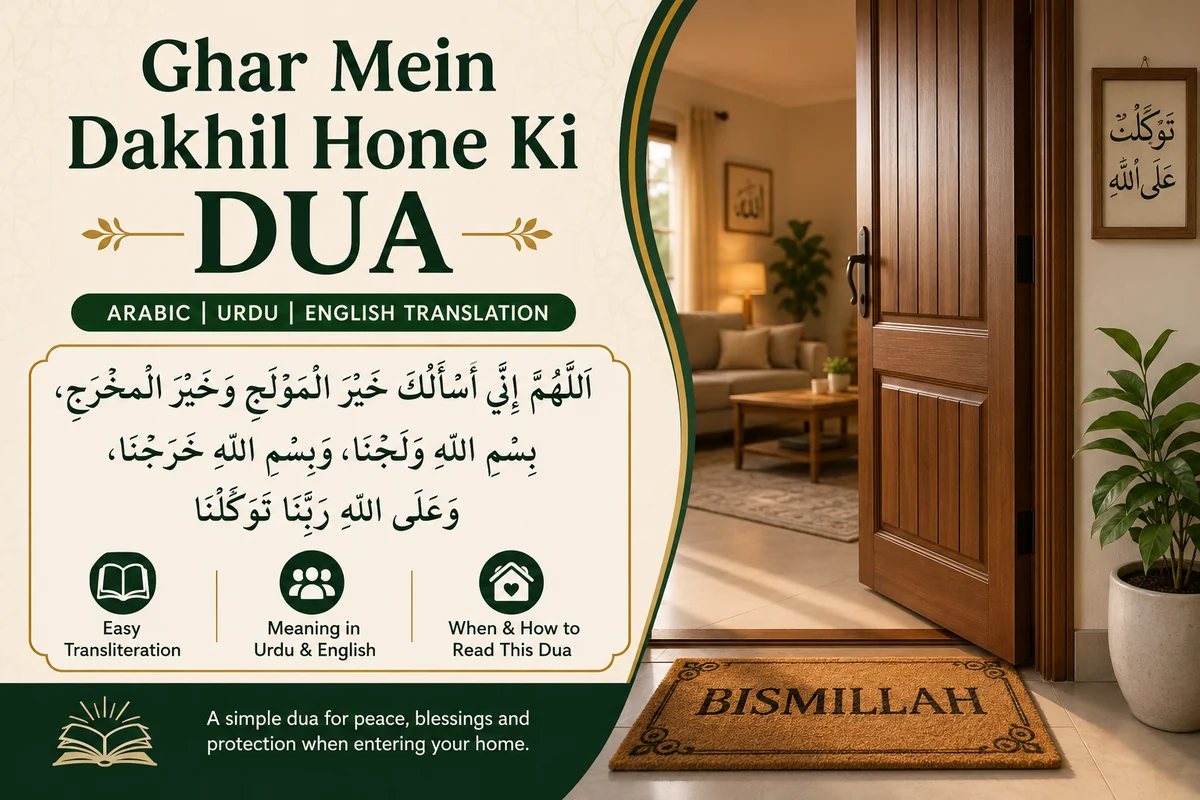
Entering your home is something you may do several times a day without giving it much thought. Islam, however, encourages Muslims to remember Allah during everyday activities too. Reading the Ghar Mein Dakhil Hone Ki Dua, saying Bismillah, and greeting your family with Salam are simple ways to bring remembrance of Allah into your daily routine.
Here you can read the dua for entering home in Arabic, Roman English, Urdu, and English, along with its meaning and important Islamic etiquette.
Ghar Mein Dakhil Hone Ki Dua in Arabic
The commonly recited dua when entering the house is:
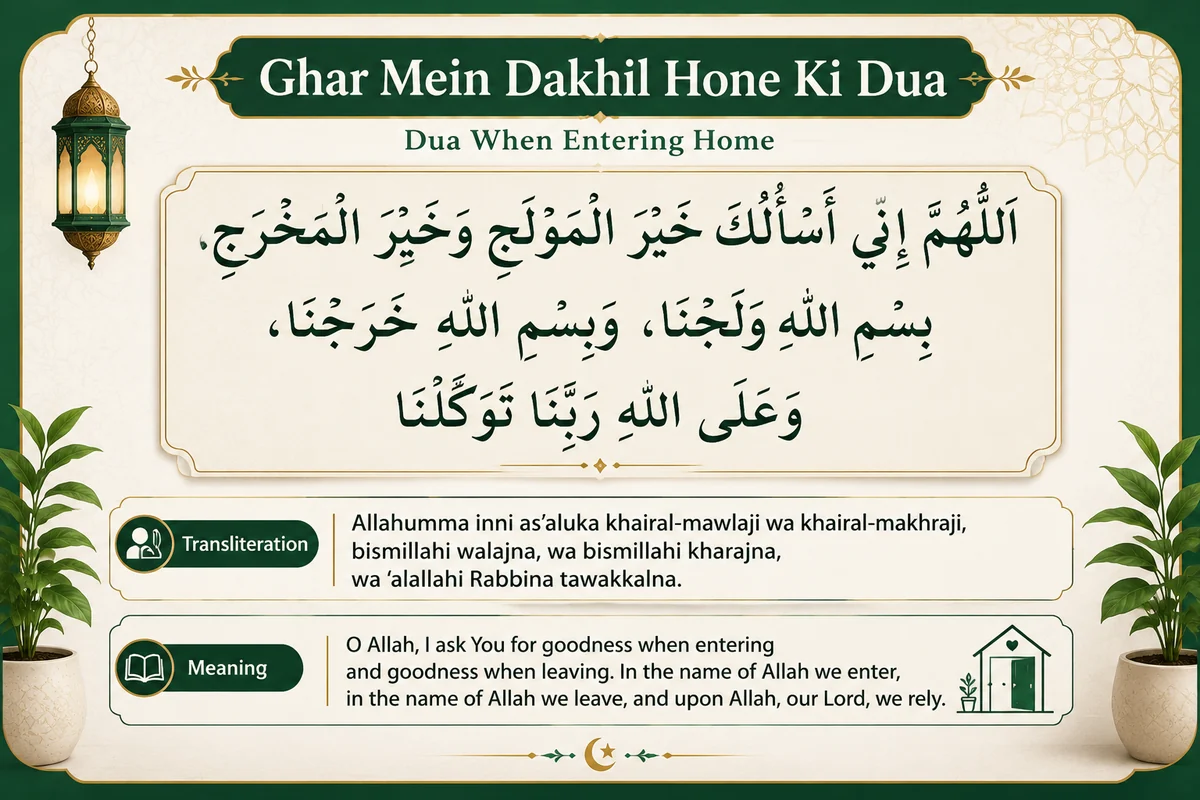
اَللّٰهُمَّ إِنِّي أَسْأَلُكَ خَيْرَ الْمَوْلَجِ وَخَيْرَ الْمَخْرَجِ، بِسْمِ اللّٰهِ وَلَجْنَا، وَبِسْمِ اللّٰهِ خَرَجْنَا، وَعَلَى اللّٰهِ رَبِّنَا تَوَكَّلْنَا
This supplication asks Allah for goodness when entering and leaving and expresses complete reliance upon Him.
The wording is recorded in Sunan Abi Dawud 5096. The reference on Sunnah.com also notes that al-Albani graded this particular narration as Da'if (weak). You can check the complete narration here: Sunan Abi Dawud 5096 on Sunnah.com.
Ghar Mein Dakhil Hone Ki Dua in English Transliteration
Allahumma inni as’aluka khairal-mawlaji wa khairal-makhraji, bismillahi walajna, wa bismillahi kharajna, wa ‘alallahi Rabbina tawakkalna.
If you cannot read Arabic fluently yet, transliteration can make the dua easier to learn. Try memorizing one phrase at a time and repeating it whenever you come home.
Ghar Mein Dakhil Hone Ki Dua Meaning in Urdu
اے اللہ! میں تجھ سے داخل ہونے کی بھلائی اور نکلنے کی بھلائی مانگتا ہوں۔ اللہ کے نام کے ساتھ ہم داخل ہوئے اور اللہ کے نام کے ساتھ ہم نکلے، اور اپنے رب اللہ ہی پر ہم نے بھروسہ کیا۔
اس دعا کے الفاظ ہمیں یاد دلاتے ہیں کہ گھر میں داخل ہوتے اور باہر نکلتے وقت اللہ تعالیٰ سے خیر مانگنی چاہیے اور ہر معاملے میں اسی پر بھروسہ رکھنا چاہیے۔
Ghar Mein Dakhil Hone Ki Dua in English
“O Allah, I ask You for goodness when entering and goodness when leaving. In the name of Allah we enter, in the name of Allah we leave, and upon Allah, our Lord, we rely.”
The meaning is straightforward. A Muslim asks Allah to make both entering and leaving beneficial and reminds themselves that their ultimate trust is in Allah.
What Should You Say When Entering Your Home?
Even if you have not memorized the longer dua yet, make a habit of remembering Allah and saying Bismillah when entering.
An authentic hadith in Sahih Muslim 2018a states that when a person mentions Allah upon entering the home and when eating, Shaytan is denied a place to stay and a meal there. You can read the narration at Sahih Muslim 2018a on Sunnah.com.
This makes remembering Allah when you enter your home a simple but meaningful daily habit.
Islamic Etiquette When Entering the Home
Along with making dua, there are a few easy manners worth remembering.
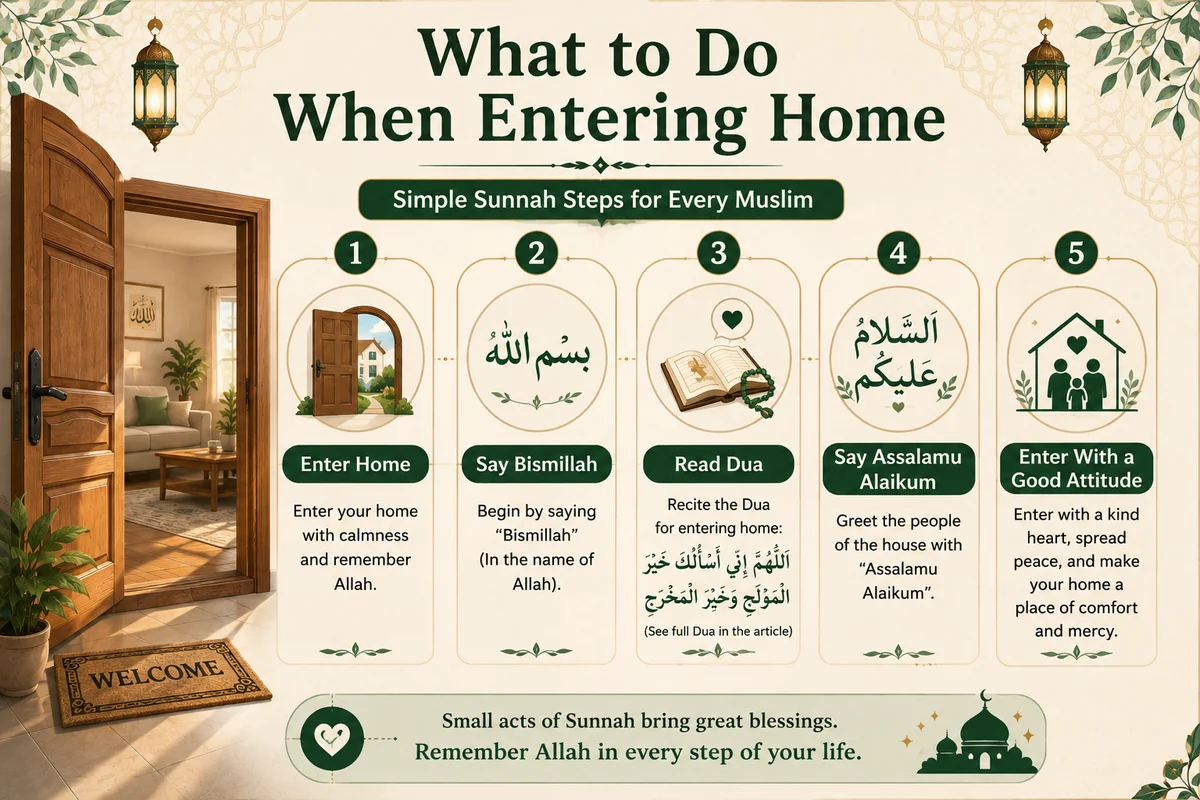
Say Bismillah
Remember Allah as you enter. It takes only a moment and helps make dhikr part of your everyday routine rather than something reserved only for formal acts of worship.
Greet Your Family With Salam
When you enter and people are present, greet them with:
Assalamu Alaikum
The Quran encourages believers to offer a blessed greeting of peace when entering homes. This guidance appears in Surah An-Nur, verse 61, which you can read at Quran 24:61 on Quran.com.
Enter With a Good Attitude
Coming home is also an opportunity to show kindness. A warm Salam, a smile, and respectful words can help create a peaceful atmosphere for everyone in the household.
Meaning and Lessons of the Dua
Understanding the words can make the ghar mein dakhil hone ki dua easier to remember.
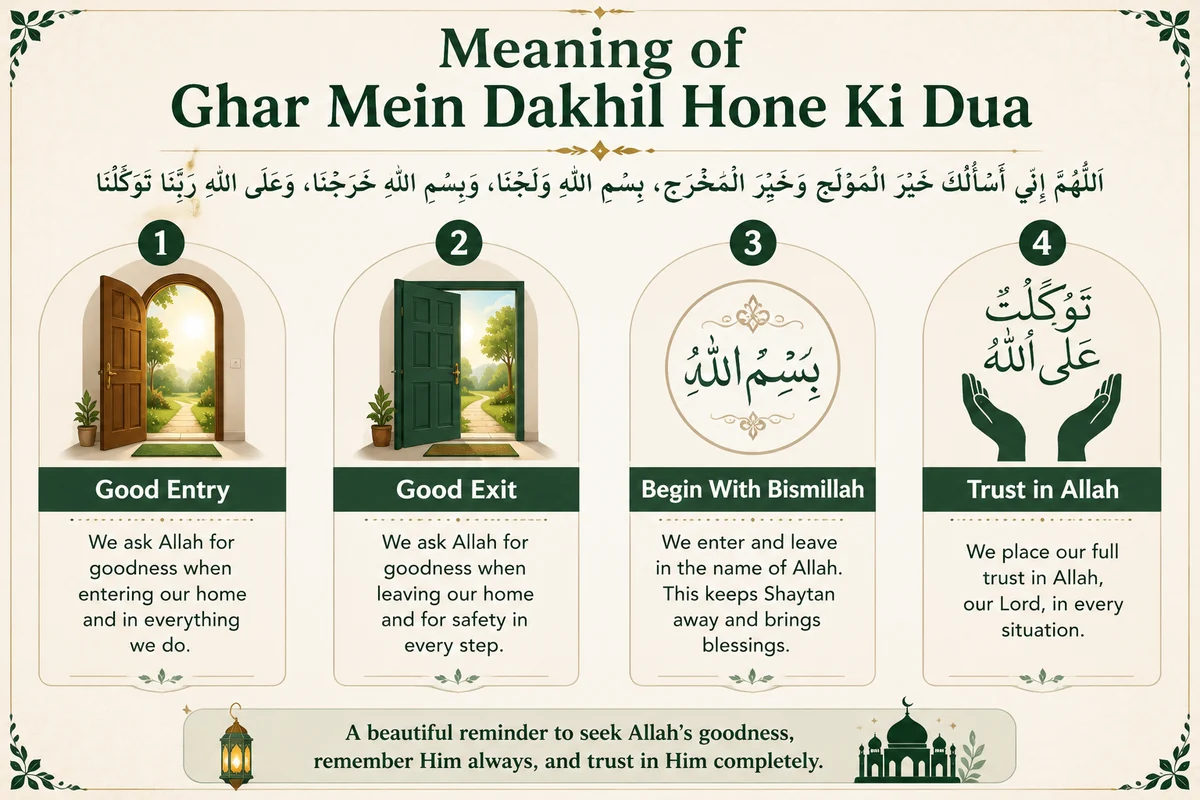
Khairal-Mawlaj refers to asking Allah for goodness in entering, while Khairal-Makhraj means asking for goodness when leaving.
Bismillah means beginning in the name of Allah, and “Wa ‘alallahi Rabbina tawakkalna” means:
“And upon Allah, our Lord, we rely.”
The dua carries a broader lesson as well. Remembering Allah does not have to be limited to Salah or special occasions. Everyday moments—waking up, eating, travelling, leaving home, and returning home—can all become opportunities for dhikr.
How to Memorize Ghar Mein Dakhil Hone Ki Dua
If the full dua seems difficult, break it into smaller sections.
Start with:
Allahumma inni as’aluka khairal-mawlaji wa khairal-makhraji.
Once you know that comfortably, add the next line. Reading the Arabic alongside the transliteration also helps with memorization.
Parents can teach children the same way by repeating the dua together whenever the family enters the house. After regular practice, it can naturally become part of the routine.
Frequently Asked Questions
What is the dua for entering home?
A commonly recited dua begins “Allahumma inni as’aluka khairal-mawlaji wa khairal-makhraji…”, asking Allah for goodness in entering and leaving.
Should I say Bismillah when entering my house?
Yes. Mentioning Allah when entering the home is supported by an authentic narration in Sahih Muslim.
Should we say Salam when entering home?
Yes. Greeting the people of the house with Assalamu Alaikum is good Islamic etiquette and is supported by Quran 24:61.
What does “Wa ‘alallahi Rabbina tawakkalna” mean?
It means “And upon Allah, our Lord, we rely.”
Final Thoughts
Learning the Ghar Mein Dakhil Hone Ki Dua is an easy way to include the remembrance of Allah in your everyday life. Remember Allah when you enter, say Bismillah, greet your family with Salam, and place your trust in Him.
A small habit repeated every day can become a meaningful reminder that even ordinary moments can be connected with faith.
 Sone Ki Dua
 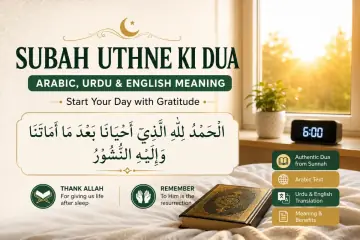 Subah Uthne Ki Dua