

Restlessness can be felt at any time. Sometimes the heart becomes worried because of a problem, sometimes we feel anxious about the future, and at other times we may experience uneasiness without any clear reason. During such moments, turning to Allah, making dua, and engaging in dhikr can provide spiritual comfort to the heart.
If you are looking for a dua for ghabrahat (restlessness or anxiety), the Quran and Sunnah contain beautiful supplications and forms of remembrance that can be recited during times of worry, sadness, and fear.
Ghabrahat Ki Dua – Masnoon Dua for Worry and Restlessness
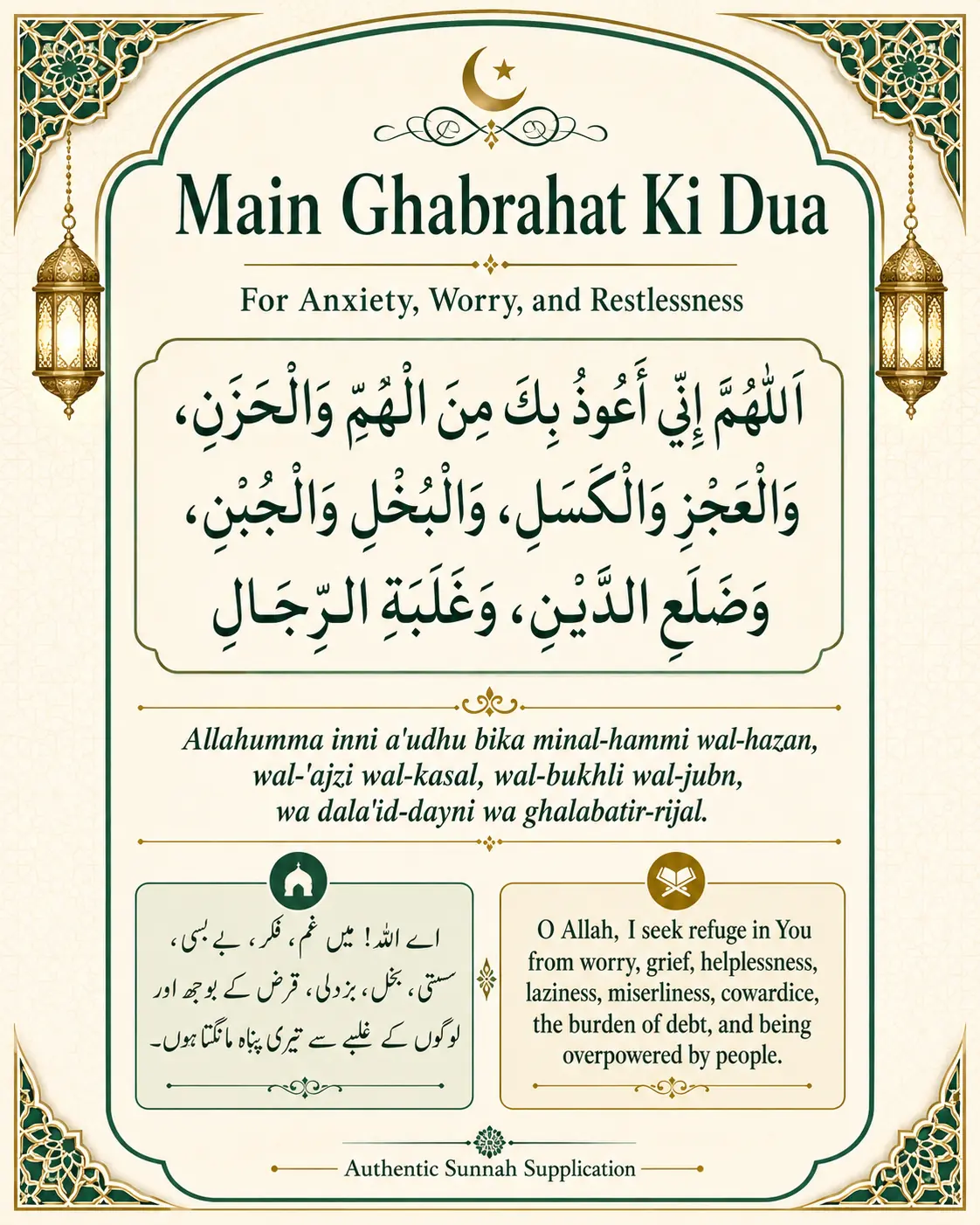
One of the well-known Masnoon duas recited during times of grief, worry, and distress is:
اَللّٰهُمَّ إِنِّي أَعُوذُ بِكَ مِنَ الْهَمِّ وَالْحَزَنِ، وَالْعَجْزِ وَالْكَسَلِ، وَالْبُخْلِ وَالْجُبْنِ، وَضَلَعِ الدَّيْنِ، وَغَلَبَةِ الرِّجَالِ
Transliteration:
Allahumma inni a'udhu bika minal-hammi wal-hazan, wal-'ajzi wal-kasal, wal-bukhli wal-jubn, wa dala'id-dayni wa ghalabatir-rijal.
English Meaning:
“O Allah, I seek refuge in You from worry and grief, from helplessness and laziness, from miserliness and cowardice, from the burden of debt, and from being overpowered by people.”
This dua does not only ask Allah for protection from sadness and worry. It also mentions several other difficulties that can place a mental and emotional burden on a person.
Quranic Verse for Restlessness of the Heart
When the heart feels uneasy, Surah Ar-Ra'd, Ayah 28 provides a beautiful reminder:
أَلَا بِذِكْرِ اللَّهِ تَطْمَئِنُّ الْقُلُوبُ
Ala bi dhikrillahi tatma'innul quloob.
Meaning:
“Surely, in the remembrance of Allah do hearts find comfort.”
This verse reminds us that the remembrance of Allah is a source of spiritual peace for a believer. Whether a problem disappears immediately or not, dhikr turns a person toward Allah and helps strengthen trust and reliance upon Him.
Surah Al-Falaq and Surah An-Naas for Fear and Sudden Restlessness
Sometimes restlessness is accompanied by fear or a feeling of unease. During such moments, reciting Surah Al-Falaq and Surah An-Naas can also be a beneficial practice.
Surah Al-Falaq begins with:
قُلْ أَعُوذُ بِرَبِّ الْفَلَقِ
Qul a'udhu bi rabbil-falaq.
Surah An-Naas begins with:
قُلْ أَعُوذُ بِرَبِّ النَّاسِ
Qul a'udhu bi rabbin-naas.
Both Surahs contain prayers seeking Allah's protection. Instead of reciting them quickly as mere words, understanding their meanings can make the recitation more meaningful and spiritually beneficial.
You can read Surah Al-Falaq and Surah An-Naas on Quran.com.
What Should You Recite When Feeling Restless?
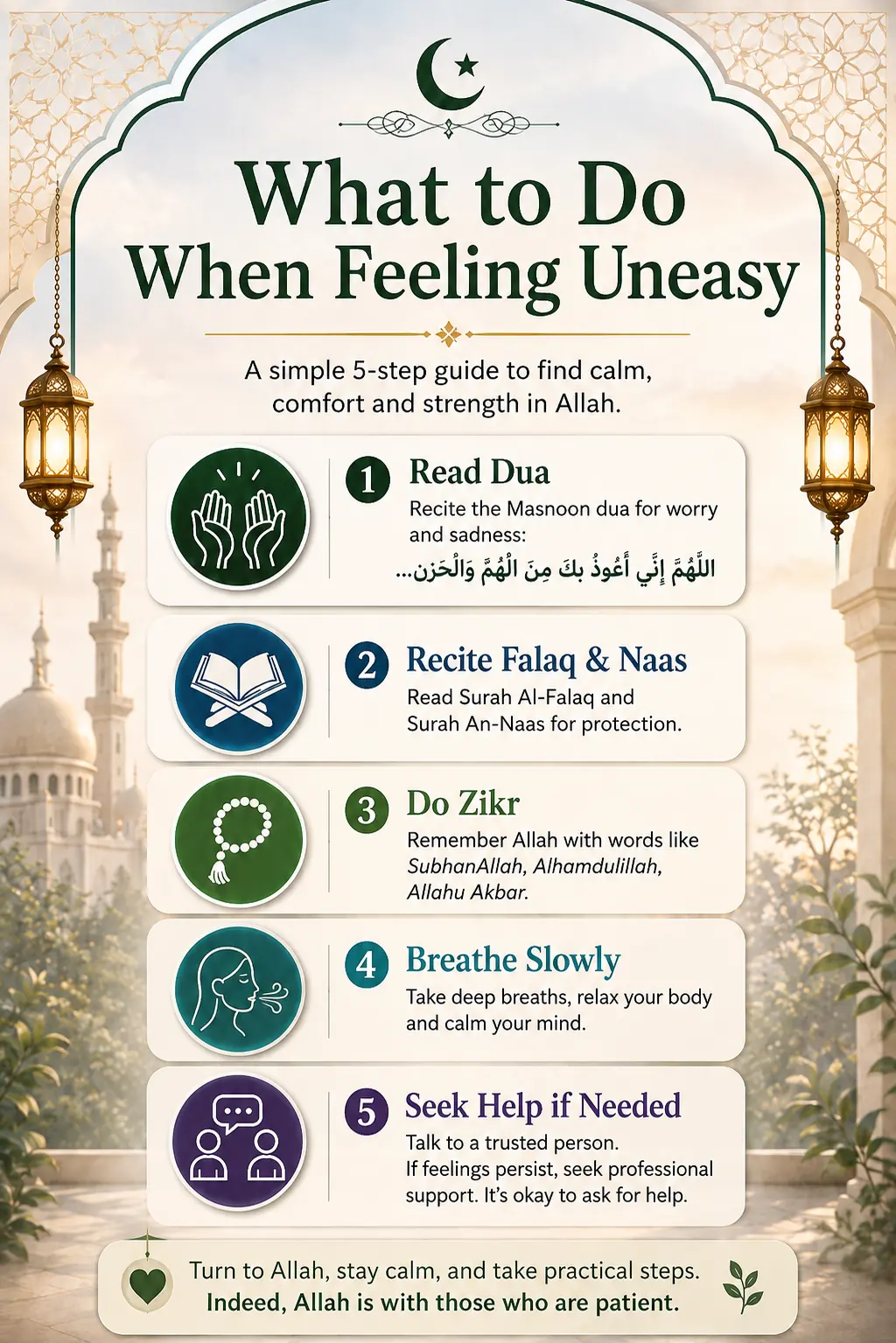
If your heart suddenly begins to feel uneasy, there is no need to make things complicated. You can follow a simple routine:
- Recite the dua beginning with “Allahumma inni a'udhu bika minal-hammi wal-hazan…”
- Recite Surah Al-Falaq and Surah An-Naas.
- Remember the verse “Ala bi dhikrillahi tatma'innul quloob.”
- Make dhikr by saying SubhanAllah, Alhamdulillah, and Allahu Akbar.
- Speak to Allah and make dua in your own language as well.
Dua is not simply about repeating Arabic words. You can sincerely tell Allah what you are feeling and ask Him for peace, guidance, and help.
Difference Between Restlessness, Fear, Worry, and Uneasiness
These words are often used in similar situations, but there can be slight differences between them.
Restlessness may refer to sudden nervousness or uneasiness. Fear is the feeling of being afraid of something. Worry usually involves repeatedly thinking about a problem or something that may happen in the future, while uneasiness is a more general feeling in which a person does not feel calm or settled inside.
These feelings can also occur together. This is why Quranic remembrance and the dua for worry and distress can be relevant in many different situations.
Dhikr and Durood for Restlessness and Worry
The remembrance of Allah should not only be reserved for difficult times. Setting aside a little time each day for Quran recitation, dua, and dhikr can be a beneficial habit.
Reciting Durood upon Prophet Muhammad ﷺ is also a virtuous act. You can spend a few minutes each day away from your phone and other distractions and use that time to remember Allah.
The goal is not to create a difficult routine, but to make your connection with Allah regular and consistent.
Combine Dua With Practical Steps
Along with dua and dhikr, some practical steps may also be helpful when you feel restless or overwhelmed. Sit in a quiet place, breathe slowly, drink some water, and consider speaking with a trusted family member or friend.
If restlessness happens frequently, becomes very intense, or begins affecting your sleep, studies, work, or daily life, it is also important to seek advice from a qualified healthcare professional. Spiritual practices and professional support do not necessarily have to be treated as alternatives to one another.
Frequently Asked Questions
What is the most common dua for ghabrahat?
One of the most well-known duas for worry and sadness is:
“Allahumma inni a'udhu bika minal-hammi wal-hazan…”
It asks Allah for protection from worry, grief, helplessness, laziness, debt, and other difficulties.
Which Quranic verse can be recited when the heart feels restless?
Surah Ar-Ra'd 13:28 reminds believers that hearts find comfort through the remembrance of Allah:
“Surely, in the remembrance of Allah do hearts find comfort.”
What should I recite if I suddenly feel afraid?
You may recite Surah Al-Falaq and Surah An-Naas and seek Allah's protection.
How many times should the dua for ghabrahat be recited?
If the Quran or an authentic Hadith does not specify a particular number, a fixed count should not be presented as Sunnah. You may recite the dua sincerely whenever you need it.
Final Words
Whenever your heart feels restless or worried, turn toward Allah. The dua for ghabrahat, Surah Al-Falaq, Surah An-Naas, and the remembrance of Allah can become sources of spiritual comfort and strengthen your trust in Him.
Try to understand the meaning of the duas you recite and sincerely speak to Allah about your worries. At the same time, if your restlessness becomes persistent or severe, do not hesitate to seek practical help and professional support when needed.

 Sone Ki Dua
  Subah Uthne Ki Dua