

Seeing the new crescent moon is a special moment for Muslims because it marks the beginning of a new month in the Islamic lunar calendar. At this time, Muslims can remember Allah and ask Him for faith, peace, safety, and goodness in the coming month.
The Chand Dekhne Ki Dua, also known as Naya Chand Dekhne Ki Dua, is a short supplication reported for the sighting of the new crescent. Below, you can read the dua in Arabic along with its transliteration, Urdu translation, English meaning, and a simple explanation.
Naya Chand Dekhne Ki Dua in Arabic
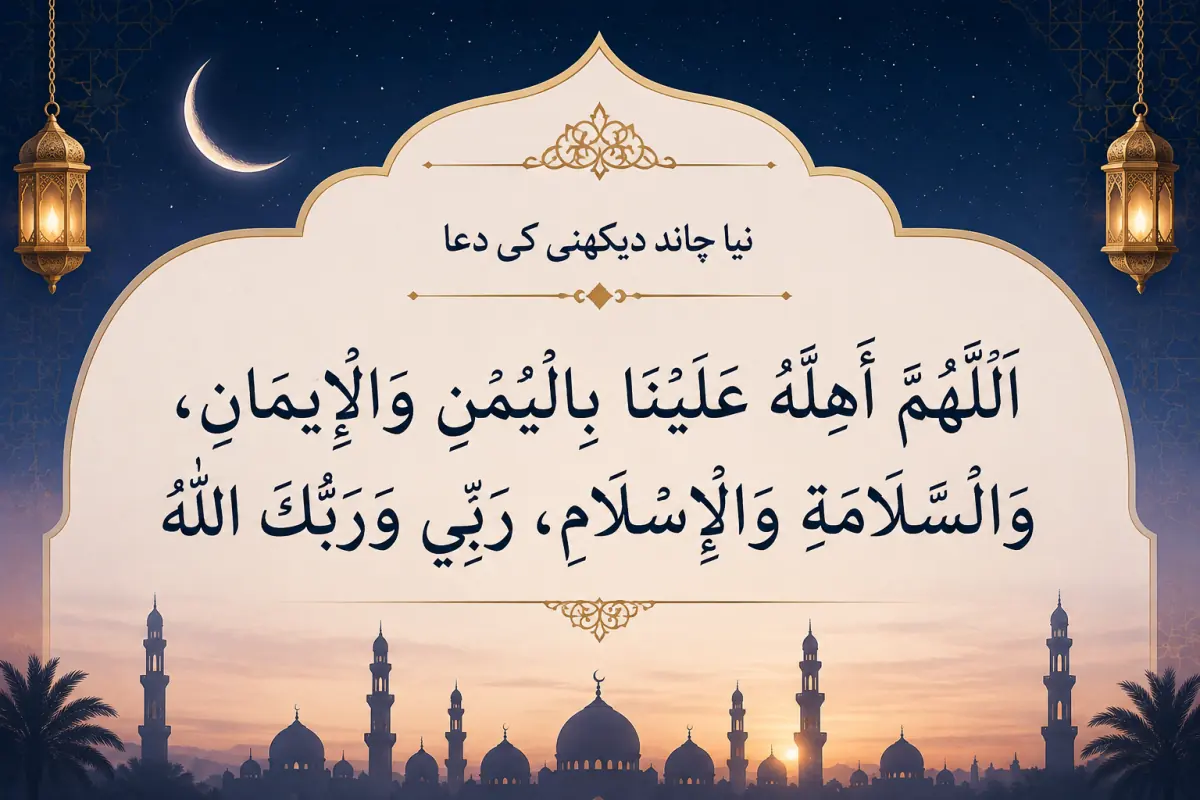
The commonly reported dua for seeing the new moon is:
اللَّهُمَّ أَهِلَّهُ عَلَيْنَا بِالْيُمْنِ وَالْإِيمَانِ، وَالسَّلَامَةِ وَالْإِسْلَامِ، رَبِّي وَرَبُّكَ اللَّهُ
It is a short dua, which makes it relatively easy to learn and remember.
Chand Dekhne Ki Dua Transliteration
Allahumma ahillahu ‘alayna bil-yumni wal-iman, was-salamati wal-Islam, Rabbi wa Rabbukallah.
If you are not comfortable reading Arabic, the transliteration can help you learn the pronunciation. However, it is also useful to understand the meaning so that you know what you are asking Allah for.
Chand Dekhne Ki Dua in Urdu
اردو ترجمہ:
اے اللہ! اس چاند کو ہم پر برکت اور ایمان، سلامتی اور اسلام کے ساتھ طلوع فرما۔ میرا اور تیرا رب اللہ ہے۔
اس دعا میں مسلمان اللہ تعالیٰ سے نئے مہینے کے لیے خیر، ایمان، سلامتی اور اسلام پر قائم رہنے کی دعا کرتا ہے۔ آخر میں یہ یاد دہانی بھی ہے کہ انسان اور چاند دونوں کا رب صرف اللہ ہے۔
Chand Dekhne Ki Dua in English
The English meaning is:
“O Allah, bring this moon over us with blessing and faith, safety and Islam. My Lord and your Lord is Allah.”
The final phrase is particularly meaningful. Saying “My Lord and your Lord is Allah” reminds us that the moon is part of Allah's creation. It has no independent power; Allah alone is the Creator and Lord of everything.
Meaning of Naya Chand Dekhne Ki Dua
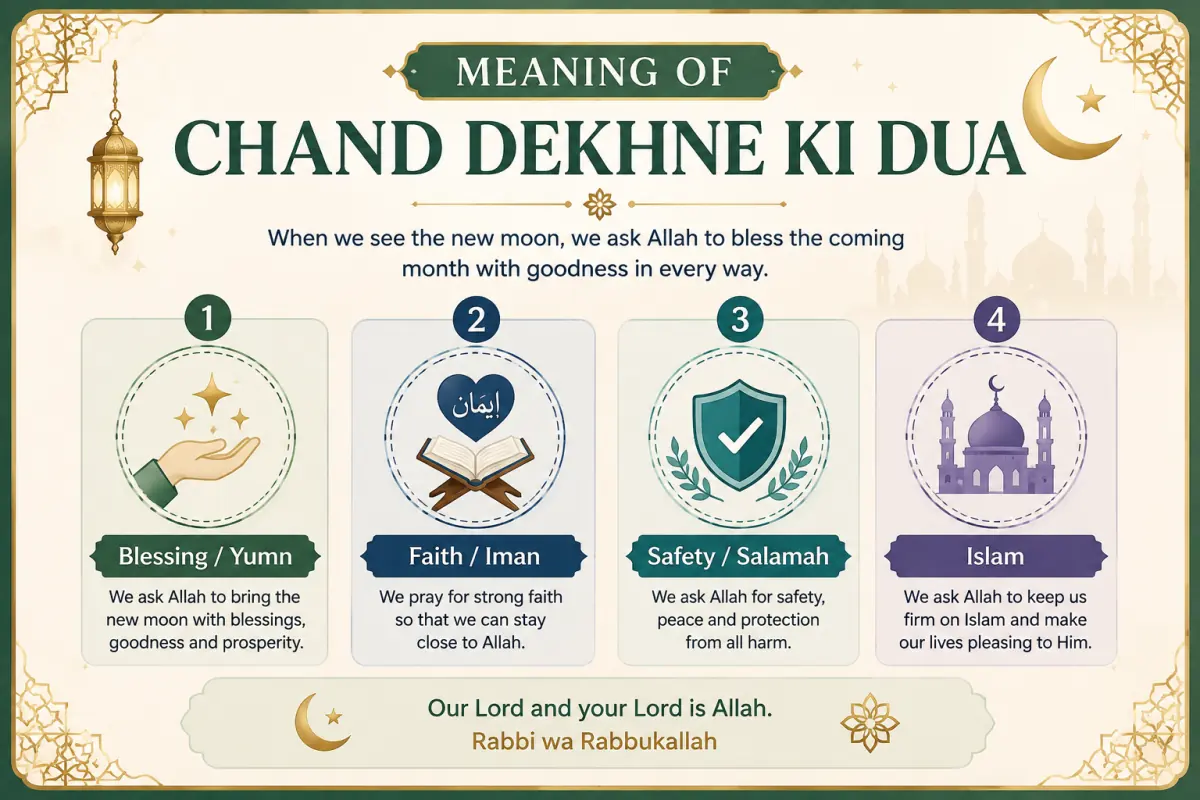
The Naya Chand Dekhne Ki Dua contains several important requests.
First, we ask Allah for yumn, which carries the meaning of goodness and blessing. We then ask for Iman, or faith, because a new month should ideally bring us closer to Allah rather than simply mark the passing of time.
The dua also asks for salamah, meaning safety, peace, and well-being, as well as remaining firm upon Islam.
This makes the supplication a meaningful way to begin a new lunar month. Instead of simply noticing the crescent in the sky, a Muslim turns the moment into an act of remembrance alongside other daily-life duas and asks Allah to make the coming days good.
When Should You Read Chand Dekhne Ki Dua?
This dua is associated with sighting the new crescent moon at the beginning of an Islamic month.
Many people search for the dua during Ramadan or before Eid al-Fitr, because moon sighting becomes especially important at those times. However, the supplication is not limited to Ramadan or Shawwal.
The Islamic calendar consists of twelve lunar months, and each month begins according to the lunar cycle. You can learn more about how the Islamic calendar works.
The dua should therefore be understood as a supplication for seeing a new crescent, rather than a general dua that needs to be recited every time you look at the moon.
Hadith Reference for Chand Dekhne Ki Dua
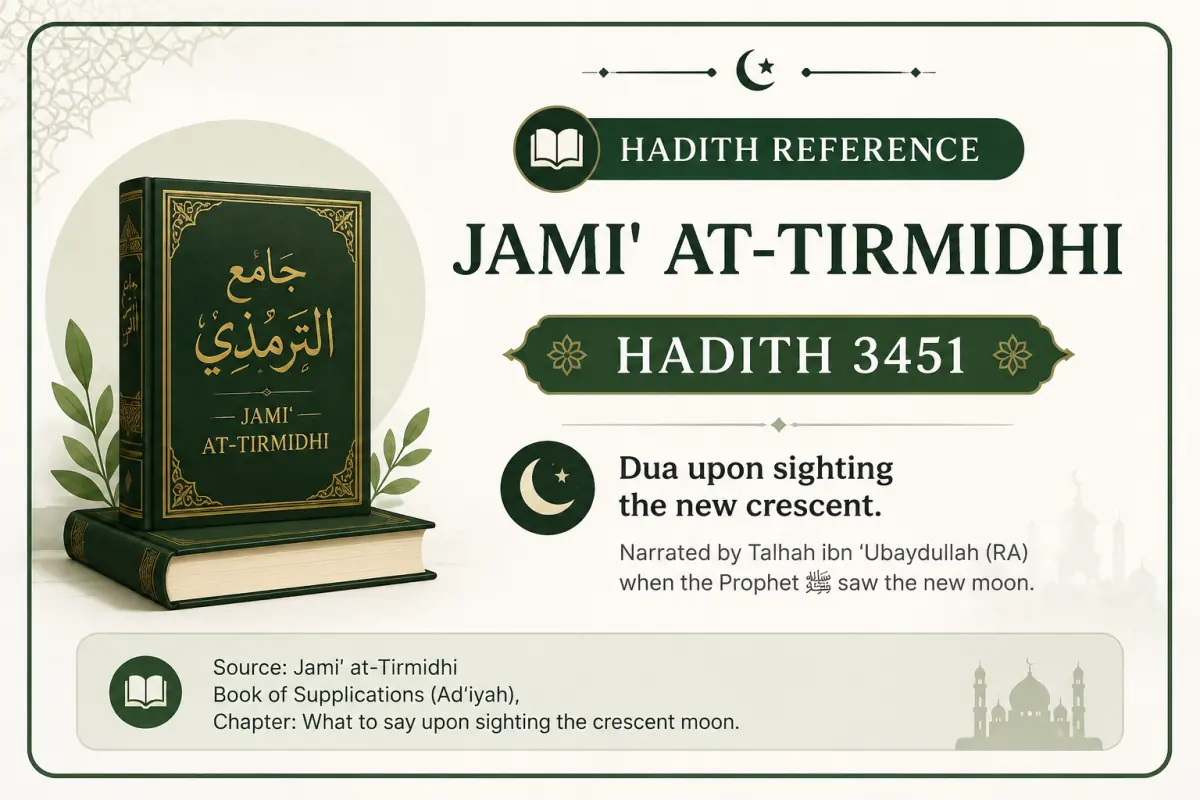
The new moon supplication is narrated from Talhah ibn Ubaydullah (RA). It is reported that when Prophet Muhammad ﷺ saw the new crescent, he would make a dua asking Allah for blessing, faith, safety, and Islam.
The narration can be found in Jami' at-Tirmidhi, Hadith 3451. Readers who want to check the Arabic text, English translation, and hadith information can view the narration on Sunnah.com.
Different scholars and hadith editions may discuss the grading of individual narrations differently, so it is better to refer to recognized hadith sources rather than relying only on unsourced social media posts.
Why Are There Different Versions of the Dua?
You may notice slightly different versions of Chand Dekhne Ki Dua in Islamic books and websites.
One familiar wording contains:
بِالْيُمْنِ وَالْإِيمَانِ وَالسَّلَامَةِ وَالْإِسْلَامِ
This asks for blessing, faith, safety, and Islam.
Another longer wording sometimes includes:
وَالتَّوْفِيقِ لِمَا تُحِبُّ وَتَرْضَى
This means asking Allah for the ability and success to do what He loves and is pleased with.
Because wording can vary between narrations and dua collections, it is helpful to check the original reference when possible.
Lessons from Chand Dekhne Ki Dua
The dua is short, but it teaches several valuable lessons.
It reminds us to begin a new period of our lives by remembering Allah. It encourages us to value faith and peace rather than focusing only on worldly goals. It also reminds us that natural objects such as the sun and moon are creations of Allah.
Most importantly, we should avoid attaching unsupported promises to the dua, such as guaranteed wealth or a specific worldly reward. Its real value lies in sincerely asking Allah for goodness, faith, safety, and guidance. The same care with reported virtues is explained in our guide to Surah Taghabun benefits.
Frequently Asked Questions
What is the dua for seeing the new moon?
The commonly reported dua begins:
اللَّهُمَّ أَهِلَّهُ عَلَيْنَا بِالْيُمْنِ وَالْإِيمَانِ
It asks Allah to bring the new moon with blessing, faith, safety, and Islam.
Is Chand Dekhne Ki Dua only for Ramadan?
No. It can be recited when the new crescent of any Islamic month is sighted.
What does “Rabbi wa Rabbukallah” mean?
It means “My Lord and your Lord is Allah.”
Can I read the dua using transliteration?
Yes. Transliteration can help you learn the pronunciation if you cannot yet read Arabic fluently. Learning the meaning alongside it is also beneficial.
Conclusion
The Chand Dekhne Ki Dua is a beautiful reminder to begin a new Islamic month by remembering Allah. Through this short supplication, Muslims ask for blessing, faith, peace, safety, and steadfastness upon Islam.
Learning the Arabic wording along with its Urdu and English meaning makes the dua easier to understand and remember. The next time you see a new crescent, you can use the moment to reflect, make dua, and ask Allah for goodness in the month ahead.
 Sone Ki Dua
  Subah Uthne Ki Dua