

When you have a fever, even simple things can feel exhausting. Along with getting enough rest, drinking fluids, and taking appropriate medical care, Muslims can turn to Allah and ask for shifa and healing.
Prophet Muhammad ﷺ taught several beautiful supplications for sickness and physical pain. There is also a commonly quoted Bukhar Ki Dua specifically mentioning fever. Below, you’ll find the Arabic duas, transliteration, meanings, and authentic references where available.
Bukhar Ki Dua in Arabic
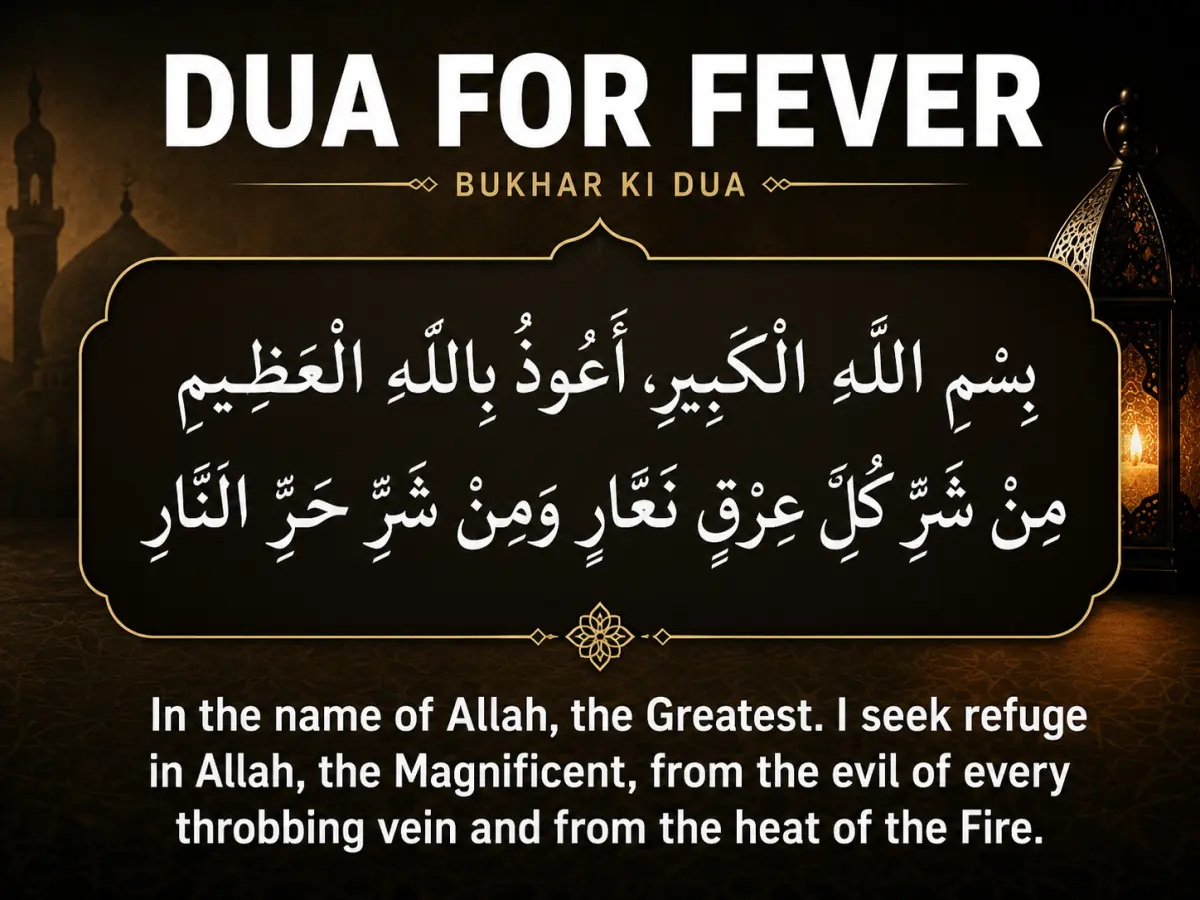
A supplication specifically mentioning fever and pain is reported in Jami‘ at-Tirmidhi 2075:
بِسْمِ اللَّهِ الْكَبِيرِ، أَعُوذُ بِاللَّهِ الْعَظِيمِ مِنْ شَرِّ كُلِّ عِرْقٍ نَعَّارٍ وَمِنْ شَرِّ حَرِّ النَّارِ
Transliteration
Bismillaahil-Kabeer, a‘oodhu billaahil-‘Azeemi min sharri kulli ‘irqin na‘aar, wa min sharri harrin-naar.
English Meaning
“In the name of Allah, the Great. I seek refuge with Allah, the Magnificent, from the evil of every gushing vein and from the evil of the heat of the Fire.”
This narration is found in Jami‘ at-Tirmidhi, although the chain has been graded Da‘if (weak) by Darussalam. So it is better to be transparent about its grading rather than presenting it as one of the strongest authenticated duas.
Authentic Dua for Shifa and Sickness
For a strongly established supplication, you can recite the dua Prophet Muhammad ﷺ used when visiting someone who was sick:
أَذْهِبِ الْبَاسَ رَبَّ النَّاسِ، اشْفِهِ أَنْتَ الشَّافِي، لَا شِفَاءَ إِلَّا شِفَاؤُكَ، شِفَاءً لَا يُغَادِرُ سَقَمًا
Transliteration
Adhhibil-ba’sa Rabb an-naas, ishfi antash-Shaafi, la shifaa’a illa shifaa’uka, shifaa’an la yughaadiru saqama.
Meaning
“O Lord of mankind, remove the illness and heal. You are the Healer. There is no healing except Your healing, a healing that leaves no sickness behind.”
This beautiful dua for shifa is recorded in authentic hadith, including Sahih Muslim. It can be recited when you have fever or another illness, and you may also recite it for someone else who is sick.
Dua for Pain During Fever
Fever may come with headaches, body aches, or pain in a particular part of the body. Prophet Muhammad ﷺ taught a specific practice for physical pain.
Place your hand on the area where you feel pain and say:
بِسْمِ اللَّهِ
Bismillah
Say it three times.
Then recite seven times:
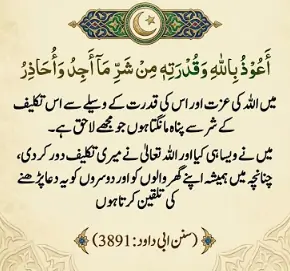
أَعُوذُ بِاللَّهِ وَقُدْرَتِهِ مِنْ شَرِّ مَا أَجِدُ وَأُحَاذِرُ
A‘oodhu billaahi wa qudratihi min sharri ma ajidu wa uhaadhir.
Meaning:
“I seek refuge with Allah and His Power from the evil of what I feel and what I fear.”
This method is recorded in Sahih Muslim 2202, making it a particularly useful Sunnah dua when sickness is accompanied by physical pain.
Surahs to Recite for Healing
Dua is not the only Islamic practice associated with seeking healing. Quranic recitation can also be used as Ruqyah.
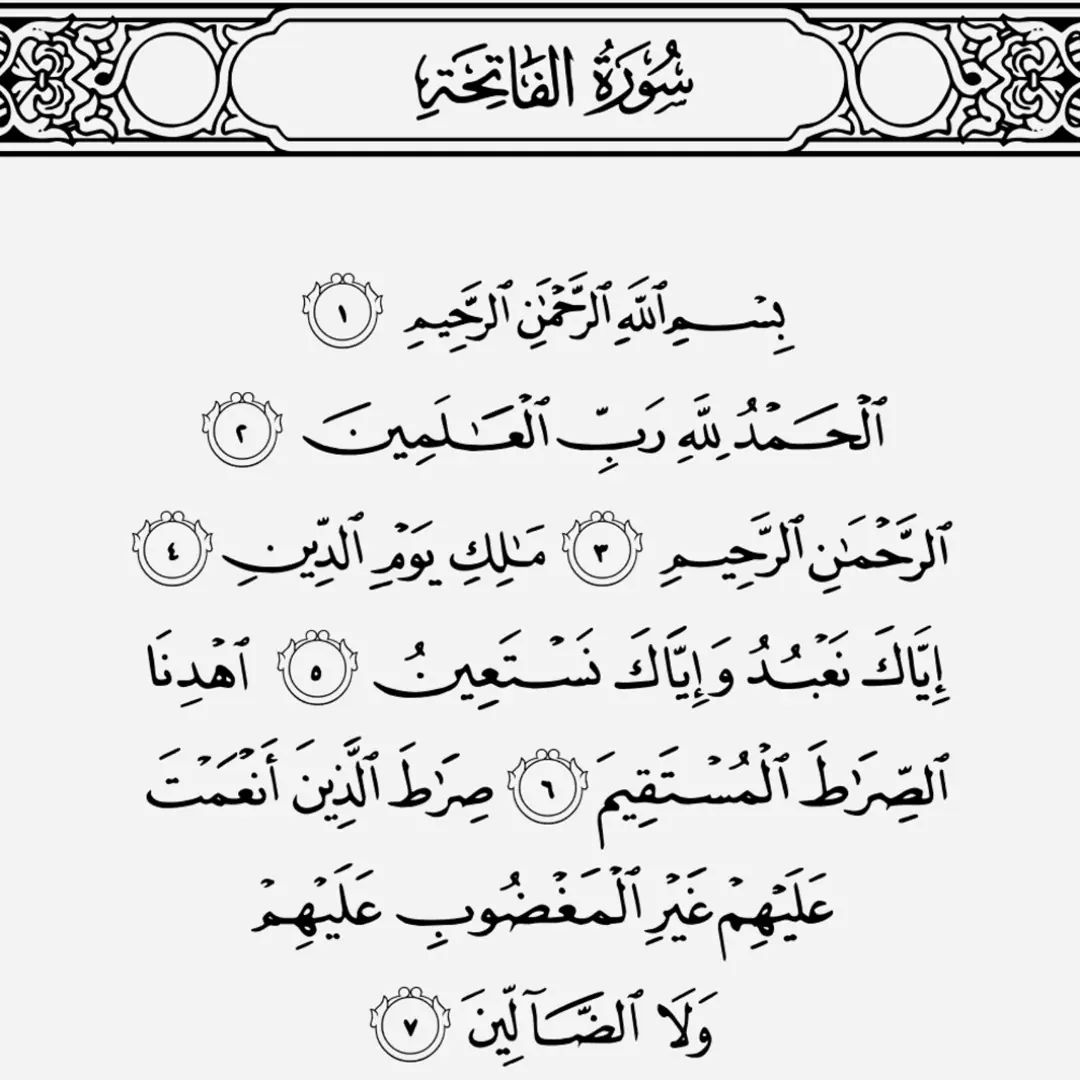
Surah Al-Fatiha
Surah Al-Fatiha has a clear connection with Ruqyah. In an authentic narration, a Companion recited Al-Fatiha as Ruqyah for a person who had been stung, and Prophet Muhammad ﷺ approved of the practice.
Because of this, Al-Fatiha is commonly recited when asking Allah for healing.
Read Sahih al-Bukhari 5736 on Sunnah.com
Surah Al-Ikhlas, Al-Falaq and An-Nas
The last three Surahs of the Quran are also commonly used for protection and Ruqyah:
- Surah Al-Ikhlas
- Surah Al-Falaq
- Surah An-Nas
They can be recited while asking Allah for protection, comfort, and healing.
How to Recite Bukhar Ki Dua
There is no complicated ritual required. If you have a fever, you can recite the duas yourself while resting. Someone else can also make dua for you.
Focus on the meaning of the words instead of simply repeating them quickly. Ask Allah sincerely for recovery and place your trust in Him.
For physical pain, follow the specific Sunnah method of saying Bismillah three times and the pain supplication seven times, because those numbers are explicitly mentioned in the authentic narration.
Does Dua Replace Medical Treatment?
No. Making dua and seeking medical treatment do not have to be separated.
If you have a fever, rest and drink plenty of fluids to reduce the risk of dehydration. A fever in adults is generally considered a temperature of 38°C or above. Medical advice should be sought when a fever is getting worse or is not improving with home care, according to NHS guidance.
Dua is an act of worship and trust in Allah, while medical treatment is one of the practical means available to us.
Frequently Asked Questions
What dua should I read for fever?
You can recite the authentic general healing dua beginning “Adhhibil-ba’sa Rabb an-naas…” and ask Allah to grant complete shifa.
What is the best dua for shifa?
The supplication asking Allah, the Healer, to remove illness — “Adhhibil-ba’sa Rabb an-naas…” — is one of the best-known authentic duas for sickness.
Can I recite Surah Al-Fatiha for fever?
Yes. Surah Al-Fatiha was approved by Prophet Muhammad ﷺ as a form of Ruqyah.
Can I make Bukhar Ki Dua for another person?
Yes. You can make dua for yourself, a family member, friend, or anyone else who is ill.
Final Words
When suffering from fever, turn to Allah with hope and sincerity. Recite authentic duas for shifa, Surah Al-Fatiha, and the Sunnah supplication for physical pain.
At the same time, look after your health and seek medical care when necessary. Spiritual reliance on Allah and sensible treatment can go together.
May Allah grant complete shifa and ease to everyone suffering from illness. Readers looking for support during emotional distress can also read the Bechaini Ki Dua. Ameen.
 Sone Ki Dua
  Subah Uthne Ki Dua